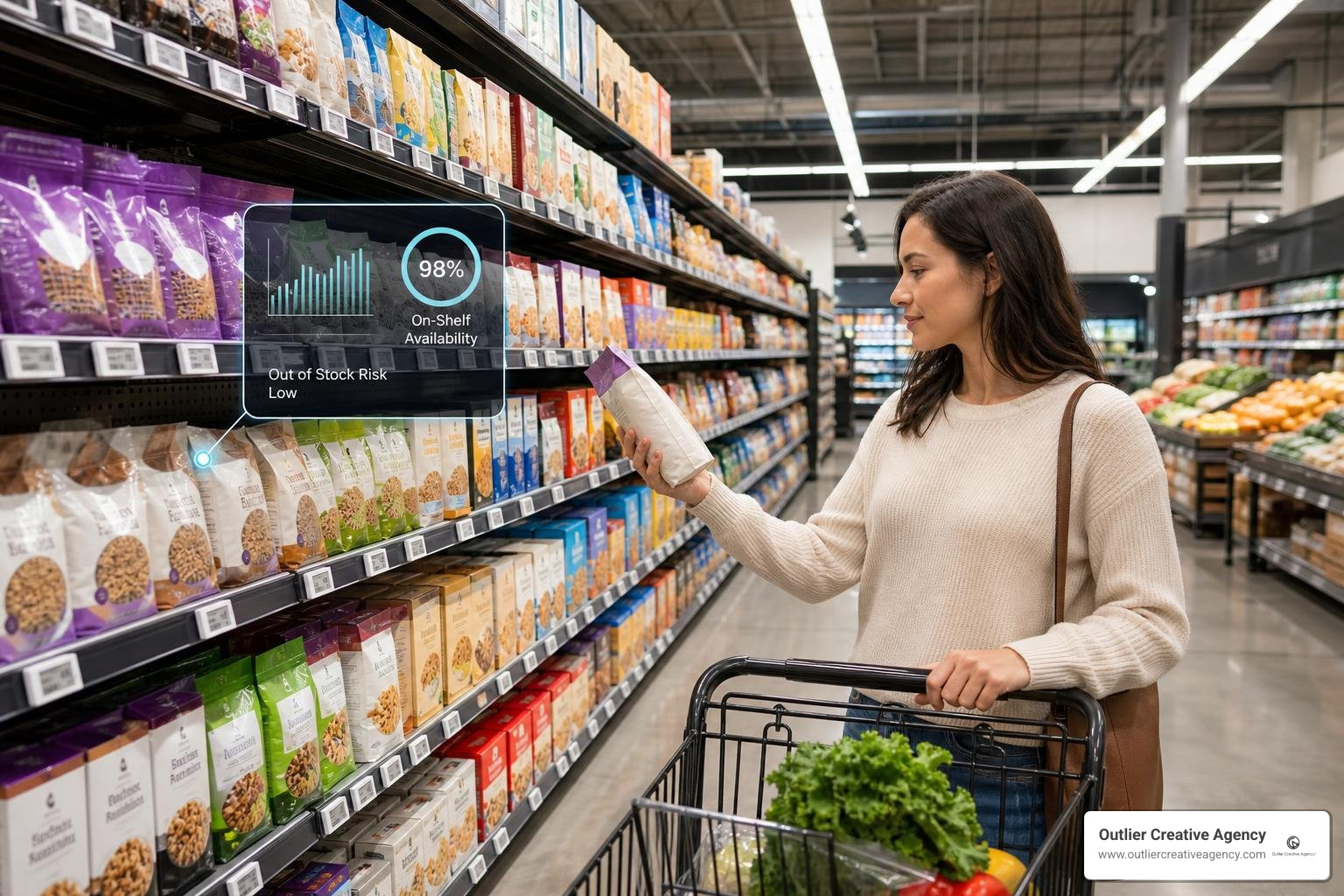
Why Crisp Retail AI Is Changing How Brands Manage the Shelf
Crisp retail AI is a vertical AI platform built specifically for consumer packaged goods (CPG) brands, retailers, and distributors — helping them turn fragmented store data into clear, automated actions.
Here is a quick snapshot of what Crisp does and who it serves:
| What | Detail |
|---|---|
| Platform type | Vertical AI (purpose-built for retail) |
| Core problems solved | Out-of-stocks, phantom inventory, slow reporting, fragmented data |
| Who uses it | 7,000+ CPGs, retailers, and distributors |
| Top CPG reach | 90 of the top 100 CPG brands |
| Key outputs | Sales growth, reduced waste, faster decisions |
| Recognition | #52 on the 2025 Inc. 5000 fastest-growing companies |
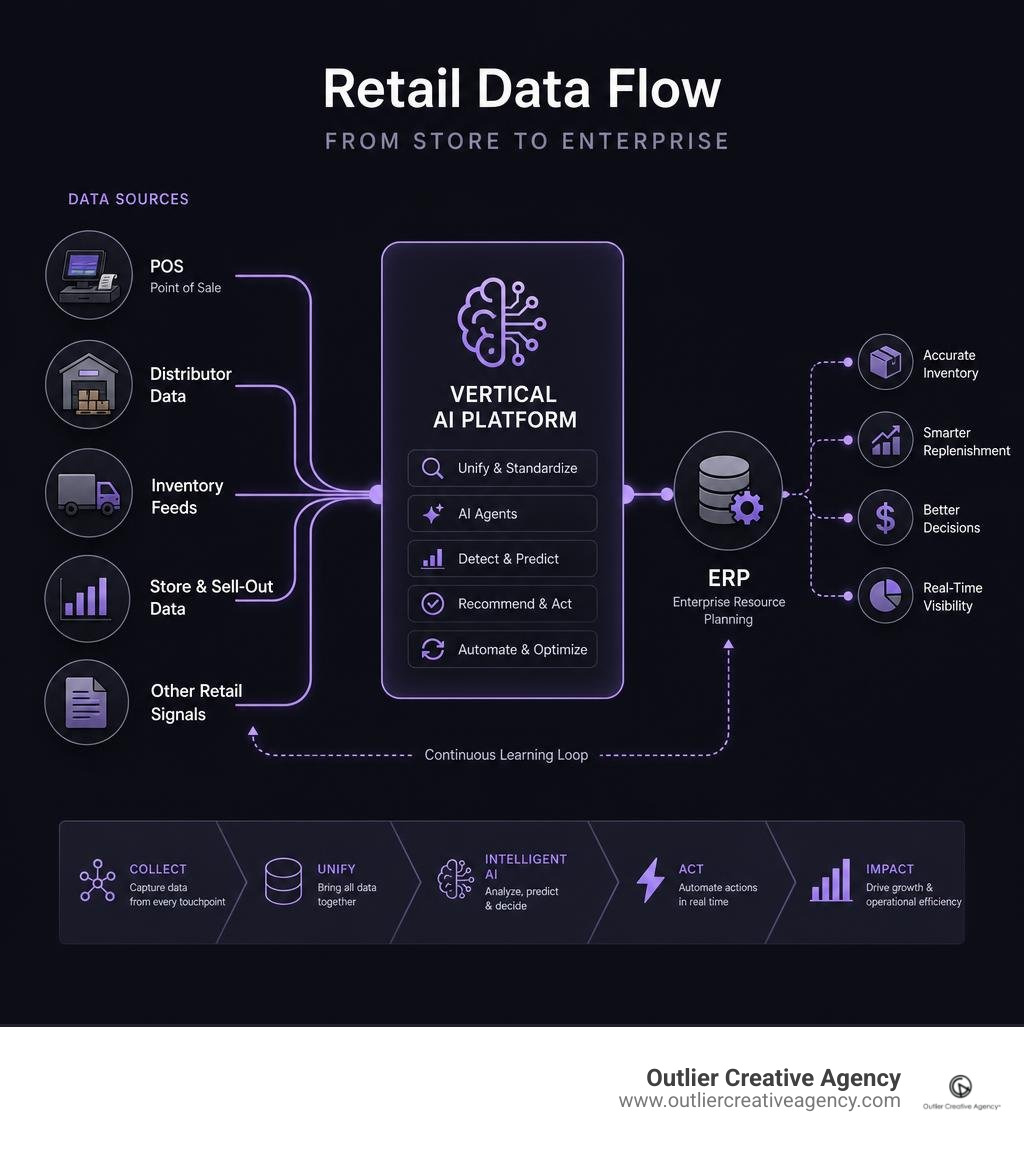
Retail teams today are drowning in data — but starving for answers. POS feeds, distributor portals, ERPs, and syndicated data all speak different languages. By the time a brand manually pulls it all together, the moment to act has already passed.
That is the core problem Crisp was built to solve. Instead of just surfacing dashboards, it deploys AI Agents that execute decisions — resolving out-of-stocks, optimizing replenishment, and automating the dreaded Monday morning report — all in real time.
The shift from passive analytics to active, outcome-driven AI is what makes this platform worth understanding, whether you work in retail or in any other data-heavy industry.
I'm Corey Larson, and at Outlier Creative Agency I've spent years helping brands — including those in highly competitive industries — cut through the noise with data-driven strategy, which is exactly why crisp retail AI caught my attention as a model for turning complex information into measurable results. The principles behind how Crisp connects data to decisions translate directly into how we think about smart marketing for ambitious, growth-focused businesses.
Demystifying Crisp Retail: The Vertical AI Platform Transforming Commerce
To understand why crisp retail is making such waves, we have to look at the vision of its founder, Are Traasdahl. Traasdahl, a seasoned tech entrepreneur who previously founded the programmatic ad tech company Tapad, realized that the physical supply chain was plagued by the same inefficiencies that once troubled digital advertising. Over $15 trillion in goods flow through global supply chains annually, yet the data required to optimize this movement remains incredibly siloed.
Traasdahl applied a programmatic mindset to physical retail shelves. Instead of waiting weeks for retrospective reports, why couldn't brands track and optimize their inventory in real time?
This vision attracted serious backing. Today, Crisp boasts $186.5M in total funding, including a recent $26M Series B1 round. This financial engine has fueled rapid growth, earning Crisp the No. 52 spot on the 2025 Inc. 5000 list of America's Fastest-Growing Private Companies (and ranking No. 1 in Arkansas, a major global epicenter for retail logistics and corporate retail strategy).
At its core, Crisp is a collaborative commerce platform. It facilitates the seamless integration, access, and exchange of data between CPGs, retailers, and distributors. By connecting over 7,000 brands through a unified data-sharing network, Crisp helps the industry move past manual spreadsheets and transition to a fully synchronized supply chain. For more insights on how data-driven systems are reshaping business growth, check out our Blog.
How Vertical AI Differentiates from General-Purpose Analytics
In the business world, there is a dangerous trap known as "data theater." This occurs when organizations use beautifully formatted, clean-looking dashboards simply to justify emotional, gut-based decisions rather than stress-testing their strategies. Traditional business intelligence (BI) tools are notorious for facilitating data theater because they require human analysts to find, clean, and interpret the data before any action can be taken.
This is where the distinction between horizontal (general-purpose) AI and vertical AI becomes critical. General-purpose AI tools, like generic LLM chatbots, are layered on top of existing systems after the fact. They can write emails or summarize documents, but they do not understand the underlying commercial logic of a specific industry.
Conversely, vertical AI is built from the ground up with semantic modeling tailored exclusively to retail. Crisp understands the unique language of SKUs, store-level logistics, and distribution centers. It connects users directly to the real-time data source behind every automated answer through traceable logic chains, ensuring absolute transparency and trust.
| Feature | General-Purpose AI (Horizontal) | Crisp Vertical AI (Retail-Specific) |
|---|---|---|
| Primary Focus | Broad tasks (chatbots, text generation) | Retail-specific outcomes (OOS, replenishment) |
| Data Layer | Unstructured web data or generic databases | Integrated POS, EDI, and distributor portals |
| Logic Model | Probabilistic text prediction | Traceable logic chains mapped to retail schemas |
| Actionability | Passive suggestions | Autonomous execution (AI Missions) |
| Setup Time | Immediate, but requires heavy customization | Pre-configured for retail and CPG datasets |
For attorneys and managing partners looking to scale their practices, understanding this distinction is vital. Just as a retailer cannot rely on a generic chatbot to manage inventory, a law firm cannot rely on generic marketing tools to capture high-value cases. To see how we apply specialized, data-driven marketing frameworks to the legal sector, explore our Services page.
How Crisp Retail Standardizes Data with the Retail Knowledge Graph
One of the greatest headaches for any CPG brand is trying to reconcile product data across different retailers. Walmart, Target, and regional grocery chains all use different naming conventions, item numbers, and classification systems.
Crisp solves this through its proprietary Retail Knowledge Graph, which powers their AI-Powered Master Data Management solution.
The Retail Knowledge Graph uses AI-driven probabilistic matching to map and attribute retail product data in minutes instead of weeks. It cleanses formatting errors, standardizes schemas across multiple sources, and enriches data with AI-assisted attribution.
This allows brands to:
- Establish a Universal Identity: Map disparate retailer and syndicated datasets to a single internal corporate standard.
- Track Private Labels: Match private label products with branded items to quantify sales encroachment and market share.
- Create Custom Classifications: Group products dynamically by flavor profiles (e.g., "Sweet + Spicy") or ingredients to spot emerging consumer trends.
Solving CPG Pain Points with Crisp Retail AI Agents
Armed with a clean data foundation, Crisp deploys specialized AI Agents to tackle the most persistent pain points in the consumer goods industry:
- Out-of-Stocks (OOS): Empty shelves cost brands millions in lost sales and damage customer loyalty. Crisp tracks inventory in real time to prevent, detect, and resolve OOS issues before the customer ever notices.
- Phantom Inventory: This occurs when a retailer’s system falsely shows an item is in stock, preventing automated replenishment systems from triggering a reorder. Crisp's AI identifies these anomalies by cross-referencing sales velocity with reported inventory levels.
- SKU Rationalization: Managing a massive product portfolio is expensive. Crisp's analytics help category managers identify underperforming SKUs that are draining resources, allowing them to optimize shelf space.
By using CPG Analytics Software - Crisp , brands can move from reactive firefighting to proactive, automated shelf management.
Key Product Offerings and Strategic Platform Acquisitions
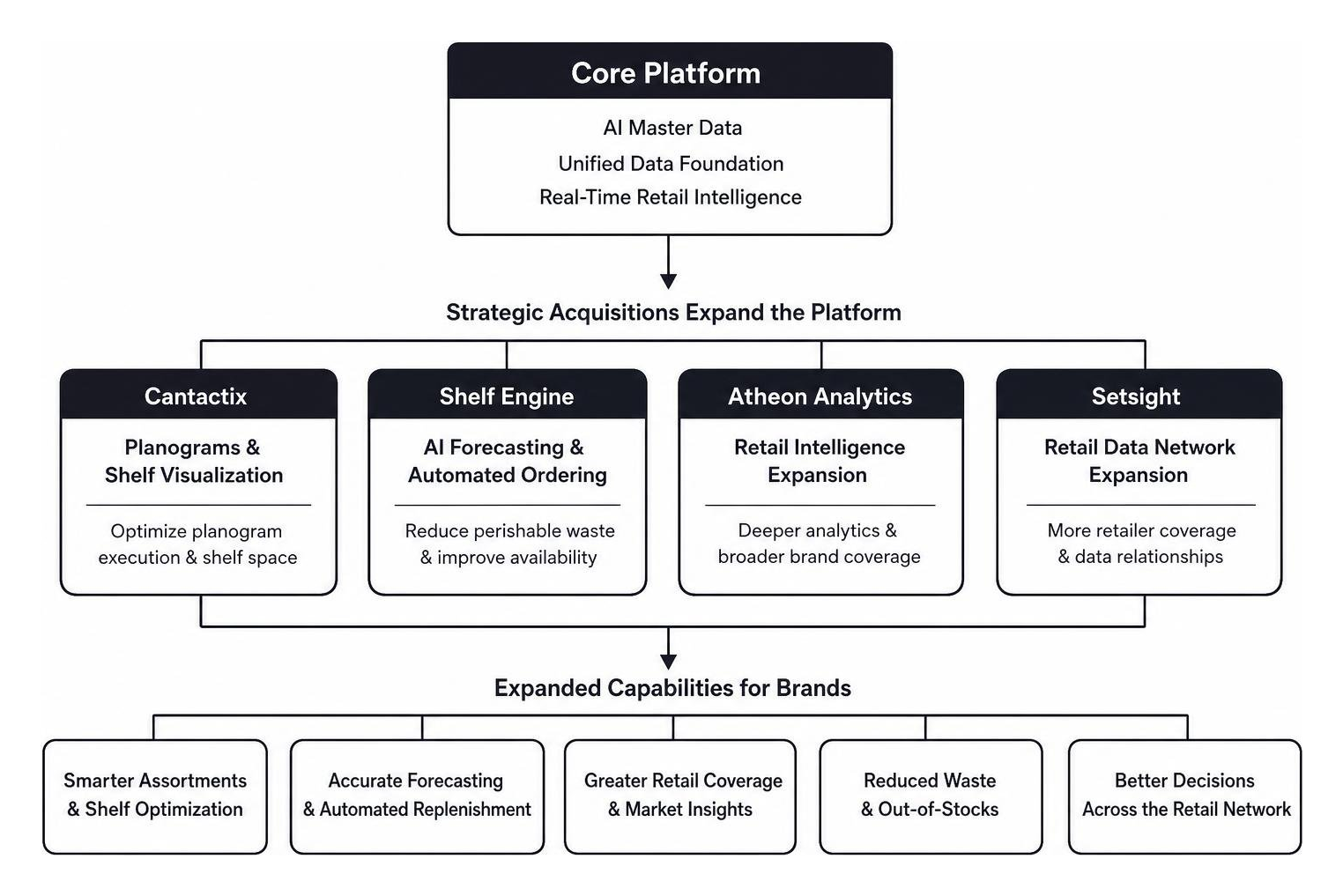
Crisp has systematically built an enterprise-grade platform through a combination of in-house innovation and aggressive, strategic acquisitions.
Over the past year, Crisp completed several key acquisitions to expand its footprint:
- Cantactix: A specialist in planograms and shelf visualization, helping brands treat physical retail shelves as high-value real estate.
- Shelf Engine: An AI-driven forecasting and automated ordering platform focused on reducing perishable food waste.
- Atheon Analytics & Setsight: Strategic acquisitions that expanded Crisp's retail intelligence capabilities and unlocked relationships with thousands of additional brands.
These acquisitions have allowed Crisp to unify the retail supply chain with marketing, bridging the gap between inventory levels and retail media networks.
Beyond acquisitions, Crisp's core product suite includes:
- AI Master Data: Automated product mapping and attribution.
- SOLYS by Crisp: Tailored specifically for Target suppliers to eliminate the weekly "spreadsheet scramble" by integrating BPD and VendorIQ data. Discover more about this offering at SOLYS by Crisp | Advanced Target analytics and reporting .
- EDI Services: Combining legacy Electronic Data Interchange (EDI) with modern API technology to streamline order management and commission tracking. For sales agencies, this ensures accurate, automated tracking from purchase order to payment, which you can read about in detail here: Easy order and commissions management for CPG agencies - Crisp .
Translating Data into Shareholder Value: The AI Missions Framework
Data is only valuable if it drives business outcomes. To bridge this gap, Crisp utilizes the "AI Missions" framework, which translates complex data points into actionable shareholder value across four key pillars:
- Sales: Accelerate revenue growth by identifying distribution gaps, optimizing promotions, and expanding shelf space.
- Profit: Expand margins by reducing waste, eliminating costly retailer penalties, and optimizing assortment.
- Cash: Optimize cash flow by streamlining order management, automating commission tracking, and improving replenishment cycles.
- Trust: Build stronger relationships with retailers and consumers by maintaining consistent on-shelf availability and reliable delivery.
Furthermore, Crisp helps retailers monetize their data. By securely sharing real-time sales and inventory insights with suppliers, retailers can create entirely new, incremental revenue streams while simultaneously improving supplier collaboration. Learn more about how to unlock these revenue channels here: How retailers can keep revenue growing with better data-sharing - Crisp .
Measurable Business Outcomes and Lessons for the Legal Industry
The real-world impact of Crisp's vertical AI platform is backed by impressive, verified data points:
- Carbone: Saved $500K in avoided out-of-stocks by tracking inventory in real time.
- Nature’s Bakery: Achieved a 175% time savings on weekly reporting and secured double-digit sales growth.
- illy: Grew total US retail sales by 10% through real-time visibility and proactive inventory management.
Parallel Lessons for Law Firms in Los Angeles and Austin
While managing a retail shelf might seem entirely different from running a law firm, the underlying business challenges are remarkably similar.
Just as a CPG brand must manage inventory across dozens of retailers, law firms in highly competitive markets like Los Angeles, California, and Austin, Texas, must manage leads across multiple marketing channels. If your firm does not have a single source of truth for your intake and marketing data, you are likely suffering from the legal equivalent of "phantom inventory" — wasted ad spend, dropped leads, and inaccurate ROI metrics.
At Outlier Creative Agency, we help law firms apply these exact vertical data principles to their marketing strategies. By integrating your SEO, PPC, and social media data into a unified dashboard, we ensure you never make critical business decisions based on gut instinct or "data theater."
Furthermore, we design these systems to comply with strict state bar advertising regulations, such as California Rule of Professional Conduct 7.1 and Texas Disciplinary Rule 7.01, ensuring your digital growth is both highly profitable and fully ethical. To see how we have helped other firms dominate their local markets, explore our Case Studies.
Frequently Asked Questions about Crisp Retail
How does Crisp Retail help CPG brands reduce out-of-stocks?
Crisp automatically ingests, cleanses, and harmonizes inventory and POS data from over 40 retailers and distributors. By providing real-time, store-level visibility, the platform allows brands to monitor inventory levels at both retail shelves and distribution centers, predicting demand and triggering automated replenishment before an out-of-stock scenario occurs.
What is the significance of Crisp's recent acquisitions?
Crisp’s acquisitions of companies like Cantactix, Shelf Engine, and Atheon Analytics have transformed the platform from a passive data aggregator into an active, end-to-end supply chain and shelf-space optimization tool. These acquisitions allow brands to combine real-time inventory forecasting with physical planogram visualization and automated ordering.
How can law firms apply vertical AI principles to their practice?
Law firms can apply vertical AI principles by moving away from siloed marketing reports and implementing unified data platforms. By connecting lead intake systems, CRM data, and digital marketing metrics (such as SEO and Google Ads), firms can automate their tracking, eliminate wasted ad spend, and focus resources on the most profitable case types.
Conclusion
Whether you are a global consumer brand trying to perfect your presence on retail shelves or an ambitious law firm aiming to dominate your local market, the lesson is clear: sustainable growth requires a robust, real-time data foundation. Moving past manual spreadsheets and passive dashboards to active, data-driven systems is the only way to build long-term value.
At Outlier Creative Agency, we specialize in building these high-performance, data-backed marketing systems for law firms in Los Angeles, Austin, and nationwide. From advanced SEO to high-impact video production for legal services, we provide the strategic roadmap your firm needs to scale.
Ready to stop guessing and start growing? Explore our Resources to learn more, or Contact our team of legal marketing experts today to schedule your consultation.