
Compare top law firm PPC services to generate more cases. Learn how paid search delivers immediate, high-intent leads for your practice.
Why Law Firm PPC Services Can Drive More Qualified Cases
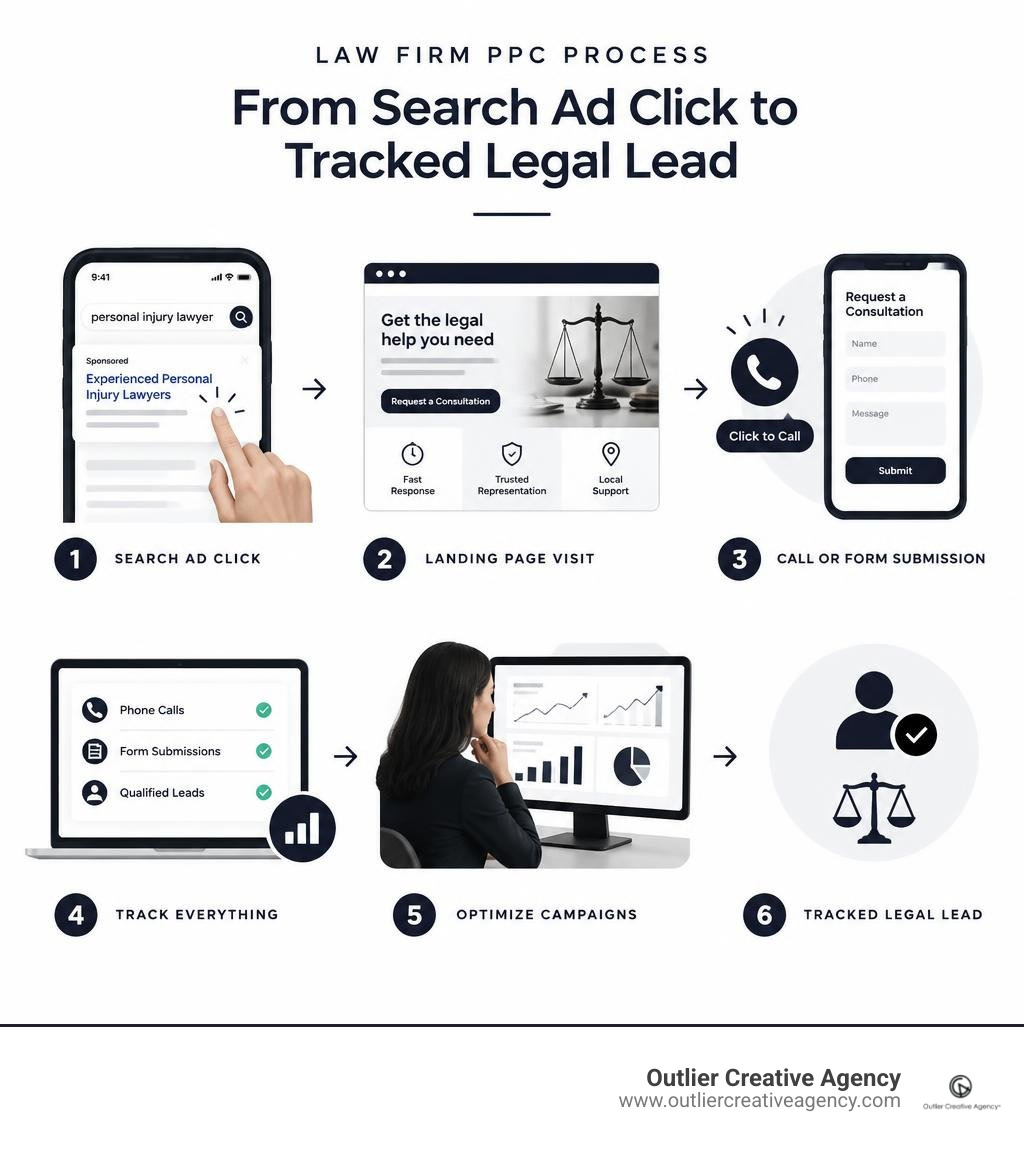
Law firm PPC services help firms place paid ads in front of people actively searching for legal help. A strong campaign targets the right practice areas and locations, sends visitors to fast mobile landing pages, tracks calls and form leads, and improves spending based on which leads become signed cases.
For a quick starting point:
- Focus campaigns on high-intent searches, such as a specific legal problem plus your city.
- Separate budgets by practice area so one costly keyword group does not drain the account.
- Use dedicated landing pages with clear calls to call or request a consultation.
- Track every call, form, and qualified case - not just clicks.
PPC can create visibility quickly, but legal advertising is competitive. Typical law firm click costs may range from $5 to $10, while highly contested personal injury terms can exceed $50 per click. Since more than 70% of PPC traffic may come from mobile devices, mobile speed, click-to-call options, and a responsive intake team are essential.
This guide explains how to compare PPC management options, set a realistic budget, protect compliance, and measure results that matter: qualified leads, retained clients, and return on ad spend.
I’m Corey Larson of Outlier Creative Agency, where we create legal marketing content, websites, video, and campaigns built to help firms communicate clearly and generate leads. Our experience supporting legal professionals informs this practical guide to law firm PPC services and the systems behind effective client acquisition.
Why Should Law Firms Consider PPC Services?

In 2026, the legal marketplace is more competitive than ever. When potential clients face urgent legal dilemmas—whether an unexpected car accident, an impending divorce, or an acute commercial dispute—they rarely spend days browsing directories. They pick up their smartphones and search for immediate legal representation.
Investing in tailored PPC services bridges the gap between active legal problems and your firm's intake desk. Traditional branding channels such as billboards or radio can build general awareness, but pay-per-click advertising puts your firm at the exact top of the search engine results page (SERP) the precise second someone experiences commercial search intent.
Consider the numbers: law practices that implement structured paid search strategies typically convert between 3% and 5% of their ad clicks into direct phone calls or form inquiries. For high-stakes practice areas, properly managed personal injury PPC campaigns frequently yield a return on ad spend (ROAS) between 5:1 and 10:1. Because client acquisition costs dictate legal practice profitability, having a tightly managed advertising funnel ensures that marketing dollars are directed entirely toward revenue-producing caseload growth.
What Are Law Firm PPC Services and How Do They Work?
At its core, search engine advertising operates on an auction-based model powered primarily by platforms such as Google Ads and Microsoft Advertising. When a prospective client searches for a phrase like "auto accident attorney near me," the ad platform holds an instantaneous auction, evaluating bid amounts, ad relevance, and landing page quality to decide which law firms earn the top placements.
While Google Ads captures approximately 60% of law firm paid search budgets, a complete paid search strategy also integrates Local Services Ads (LSAs) and hyper-targeted click-to-call campaigns. Understanding this landscape ensures that your practice captures prospects across different evaluation stages while keeping cost-per-lead numbers stable.
What Core Capabilities Are Included in Law Firm PPC Services?
A comprehensive pay-per-click engagement is not simply about setting bids on keywords. It is a complete operational workflow designed to capture, screen, and convert high-intent prospective clients. Core capabilities include:
- Granular Campaign Architecture: Segregating campaigns by specific legal issues (e.g., separating rear-end collisions from commercial truck accidents) rather than grouping unrelated terms together.
- Hyper-Local Audience and Geographic Targeting: Focusing ad spend exclusively within the exact jurisdictions, counties, or metro areas your firm serves, including geo-fencing high-value zones.
- Bar-Compliant Ad Copywriting: Drafting compelling, click-worthy ad headlines and descriptions that communicate authority while adhering strictly to ethical guidelines.
- Proactive Bid Management: Utilizing manual and smart bidding strategies to maintain prime positions during business hours without overpaying for low-intent clicks.
- Full-Funnel Conversion Tracking: Connecting call tracking numbers, web form submissions, and your firm’s intake software to evaluate true cost-per-retained-case.
Implementing deliberate attorney PPC advertising ensures your campaigns target only the most commercially viable search queries.
Why Should Legal Practices Prioritize Paid Search Advertising?
Search engine optimization (SEO) and organic authority are vital long-term assets, but they require time to mature. Paid search provides immediate visibility. The day your campaign launches, your firm appears at the top of search queries for your target practice areas.
Furthermore, paid search allows managing partners to maintain absolute budget control. Whether your firm operates in Los Angeles, California, or Austin, Texas, you can scale budgets up when intake capacity expands or narrow ad delivery to specific zip codes during peak hours. Reviewing verified law firm PPC results highlights how consistent, controlled paid search visibility transforms predictable ad spend into reliable caseload velocity.
How Do You Compare Different Options for Law Firm PPC Management?

When selecting a partner or operational model for paid search management, law firms generally evaluate three primary pathways: building an in-house marketing team, hiring a generalist digital agency, or partnering with a dedicated legal PPC agency.
| Feature / Model | In-House Management | Generalist Marketing Agency | Specialized Legal PPC Agency |
|---|---|---|---|
| Legal Industry Knowledge | High (internal) | Low | High (exclusive) |
| State Bar Compliance Familiarity | Firm-dependent | Low to Moderate | High |
| Negative Keyword Depth | Basic to Moderate | Standard | Advanced (Legal-specific) |
| Setup & Overhead Costs | High (salaries, tooling) | Moderate | Predictable Retainer/Fee |
| Speed to Results | Moderate | Moderate | Rapid |
| Account Ownership | 100% Retained | Varies | 100% Client Retained |
How Do Specialized Legal PPC Agencies Differ From Generalist Digital Marketers?
Generalist marketing agencies often run campaigns for e-commerce shops, local dentists, and home service contractors alongside law practices. However, legal paid search is fundamentally different. An inexperienced generalist might bid heavily on broad terms like "free legal advice" or "small claims court forms," burning through thousands of dollars on visitors who will never retain an attorney.
A specialized law firm PPC agency arrives with thousands of pre-built, legal-specific negative keywords (such as "pro bono," "salary," "jobs," "definition," or "classes"). Furthermore, legal specialists understand how State Bar rules restrict comparative statements, subjective claims, or unverified settlement promises. Selecting the best PPC for lawyers safeguards your practice against both wasted ad spend and disciplinary inquiries.
When Should You Choose Comprehensive PPC Management Instead of Dedicated PPC Consulting?
If your law firm employs an experienced in-house digital marketer who understands Google Ads mechanics but needs strategic audits, engaging a pay per click consultant for lawyers can help refine bidding algorithms and identify wasted spend.
However, if your firm lacks dedicated internal marketing staff to monitor search terms daily, perform split testing, and maintain tracking pipelines, full-service management is preferable. A turnkey approach allows your attorneys to focus on practicing law and closing consultations while an experienced agency handles campaign optimization.

What Strategies Deliver Maximum ROI from Legal Paid Advertising?
Maximizing returns on legal paid search requires an integrated technical framework. Top-performing campaigns do not rely on high bids alone; they achieve high Google Quality Scores, lowering the effective cost per click while securing prominent ad positions.
Key strategies include:
- Practice Area Segmentation: Isolate distinct case types into separate campaigns. A firm handling multiple disciplines must never mix PPC for family lawyer searches with personal injury or criminal defense ad groups.
- Hyper-Specific Practice Campaigns: High-value litigation areas, such as California business litigation ads, work injury lawyer PPC, or birth injury attorney ads, demand bespoke ad copy, dedicated negative keyword profiles, and tailored value propositions.
- Extensive Negative Keyword Sculpting: Continuously audit search query reports to filter out unqualified searches before they trigger costly clicks.
- Ad Extensions and Assets: Maximize screen real estate on mobile devices by integrating call assets, location assets, sitelinks, and structured snippets.
To dive deeper into tactical execution, explore our comprehensive personal injury PPC complete guide 2026 for practical examples of campaign structuring.
How Do You Build High-Converting Landing Pages for Legal Leads?
Sending paid clicks to your firm's general homepage is one of the fastest ways to exhaust an ad budget with minimal return. When a user clicks an ad for an auto accident attorney, they expect to land on a page focused exclusively on motor vehicle collisions.
High-converting legal landing pages should feature:
- Mobile-First Design: Since over 70% of legal paid search traffic originates on mobile devices, pages must load in under two seconds with prominent, sticky click-to-call buttons.
- Immediate Trust Signals: Prominently display client reviews, peer recognition badges, and relevant bar associations above the fold.
- Frictionless Intake Forms: Keep contact forms concise, requesting only essential initial details (Name, Phone Number, Brief Description of Case).
- Clear Next Steps: State clearly what happens after contact: "Free, 100% Confidential Consultation within 15 Minutes."
If your current conversion rates lag below 3%, performing a structured law firm PPC audit guide 2026 review can reveal technical bottlenecks that suppress user conversions.
How Can You Maintain State Bar Ethics and Compliance in Legal Ads?
Legal marketing is governed by strict ethical mandates, primarily modeled after the American Bar Association's Model Rules of Professional Conduct (such as Rule 7.1 and Rule 7.2) and individual state bar associations. In California and Texas, advertising rules enforce rigorous standards regarding truthfulness and promotional representations.
Key compliance guardrails include:
- Avoiding Misleading Claims: Never guarantee specific financial settlements or legal outcomes.
- Proper Specialization Disclaimers: Do not describe attorneys as "specialists" or "experts" unless formally certified by the state bar or an accredited board.
- Transparent Past Results: When highlighting past case results, include clear disclaimers that prior outcomes do not guarantee similar future verdicts.
- Mandatory Identification: Clearly display the firm's name and the office address responsible for the advertisement.
Firms should benchmark their marketing campaigns against the American Bar Association Rule 7.1 to ensure all creative assets comply with professional standards.
What Should Law Firms Expect to Invest in Paid Search?
Legal advertising budgets vary depending on geographic market size and target practice areas. Across the industry, law firms typically spend between $1,000 and $10,000 per month on PPC advertising, with highly competitive personal injury and mass tort practices in major metropolitan markets investing upwards of $50,000 monthly.
Average cost-per-click metrics generally range between $5 and $10 across standard consumer law categories (such as estate planning or uncontested divorce), while contested litigation and catastrophic injury keywords frequently surpass $50 to $100 per click.
How Much Do Specialized Law Firm PPC Services Cost in 2026?
When engaging an agency for PPC management, fee structures generally follow one of three models:
- Percentage of Ad Spend: Typically 15% to 25% of total monthly media spend, often paired with a baseline minimum management fee.
- Flat Monthly Retainer: A set management fee (ranging from $1,500 to $5,000+ monthly) based on account complexity and lead volume targets.
- Hybrid Models: A reduced base retainer plus performance bonuses tied to qualified lead generation.
Firms seeking sustainable budget allocation can reference our affordable PPC for lawyers guide to structure balanced campaigns that deliver measurable returns without wasteful spending. For broader guidance, our PPC marketing guide for lawyers outlines tactical framework planning.
How Can Law Firms Track and Maximize PPC Return on Investment?
Measuring paid search performance requires tracking business outcomes rather than vanity metrics like impressions or clicks. A successful tracking architecture connects your Google Ads account directly to your legal intake CRM.
Essential metrics include:
- Cost Per Lead (CPL): Total ad spend divided by form submissions and inbound qualified phone calls.
- Cost Per Acquisition (CPA): Total ad spend divided by the number of formally signed, retained clients.
- Lead-to-Case Conversion Rate: The percentage of inbound inquiries that pass screening and sign representation agreements.
- Return on Ad Spend (ROAS): Total fees generated from acquired cases relative to total advertising expenditures.
For a comprehensive review of analytics implementation, consult our law firm PPC analytics guide 2026.
What Questions Do Law Firms Ask About Law Firm PPC Services?
How quickly can a law firm generate signed cases from PPC ads?
Paid search campaigns achieve instant visibility upon launch, with initial leads often arriving within the first 24 to 48 hours. However, turning those leads into signed cases depends heavily on your firm's intake responsiveness. Connecting with callers immediately and following up on web form submissions within five minutes significantly increases the likelihood of securing the case before the prospect contacts another firm.
Why are legal keywords more expensive than other industries?
Legal keywords carry higher click costs due to high case values and aggressive market competition. Because a single complex commercial dispute or catastrophic injury case can generate significant fees for a law firm, competitive bidding on Google Ads naturally increases cost-per-click values for high-intent search terms.
What is the difference between Google Ads and Local Services Ads for lawyers?
Traditional Google Ads run on a pay-per-click model where you pay for user visits to your landing page regardless of whether they call. Local Services Ads (LSAs) appear at the very top of the search page with a green "Google Screened" badge and operate on a pay-per-lead basis, where your firm pays primarily for direct phone calls and messages from qualified local users.
How much should a law firm spend per month on PPC advertising?
A viable starting budget depends on your practice area and geographic market. In mid-sized markets, a starting budget of $2,500 to $5,000 per month allows for sufficient keyword testing and lead volume. In major metropolitan markets or competitive practice areas such as personal injury, monthly ad budgets typically start at $10,000 or more to achieve consistent case flow. Reviewing our PPC advertising lawyers guide 2026 offers additional budgeting frameworks.
How Can Law Firms Choose the Right PPC Services Partner?
Selecting the right PPC partner requires verifying legal industry expertise, transparency, and data ownership. Your law firm should always retain 100% administrative ownership of your Google Ads account, campaign assets, and conversion data. Avoid vendors that obscure performance metrics or bundle media spend into opaque markups.
At Outlier Creative Agency, we build data-driven marketing systems exclusively for law firms across the nation, supporting practices from our offices in Los Angeles, California, and Austin, Texas. Our multi-award-winning team develops integrated paid search, website design, and SEO campaigns designed around bar advertising compliance and measurable caseload growth.
To evaluate how your current digital marketing performs or explore opportunities for high-intent paid search, review our law firm marketing scorecard, examine our proven client results in our case studies, or discover how you can scale your caseload with specialized law firm PPC services by scheduling a strategy consultation today. Additional insights are available in our guide on PPC for attorneys and our complete overview of law firm Adwords management.
Frequently Asked Questions
What is the typical conversion rate for law firm PPC landing pages?
Industry benchmarks show an average landing page conversion rate of 3% to 5% for legal search ads. High-performing, mobile-optimized landing pages with direct click-to-call buttons and streamlined intake forms often achieve conversion rates exceeding 8% to 12%.
Can my firm run Google Ads without dedicated landing pages?
While technically possible to send traffic to your main website homepage, doing so usually lowers Quality Scores and reduces conversion rates. Dedicated landing pages aligned with the user's specific search query provide a focused experience that improves lead generation and lowers overall cost-per-lead.
How does Outlier Creative Agency prevent click fraud in legal campaigns?
We implement automated click fraud detection and monitoring tools that identify and block suspicious IP addresses, bot traffic, and competitor click patterns in real time, ensuring your ad budget is reserved for legitimate prospective clients.
Are pay-per-click expenses tax-deductible for law practices?
In most jurisdictions, marketing and advertising investments—including Google Ads spend and agency management fees—are treated as deductible ordinary business expenses. Consult your firm's CPA or tax professional for specific tax guidance.