
Learn how plastic surgery referral marketing builds a steady pipeline of high-value patients for aesthetic practices.
How Plastic Surgery Referral Marketing Turns Good Care Into Word of Mouth
To make plastic surgery referral marketing work, start with a consistent patient experience. Give patients clear recovery guidance, follow up after care, and make it easy for satisfied patients to share your practice with friends. Ask for reviews without pressuring patients, and track which inquiries come from personal recommendations.
Word of mouth is strongest when it rests on trust, not a one-time promotion. A simple process helps your team earn referrals, respond to new inquiries, and see which efforts lead to consultations.
I'm Corey Larson of Outlier Creative Agency. My experience creating videos, social content, and websites for legal experts informs this practical guide to plastic surgery referral marketing.
Elective Cosmetic vs. Reconstructive Referral Dynamics
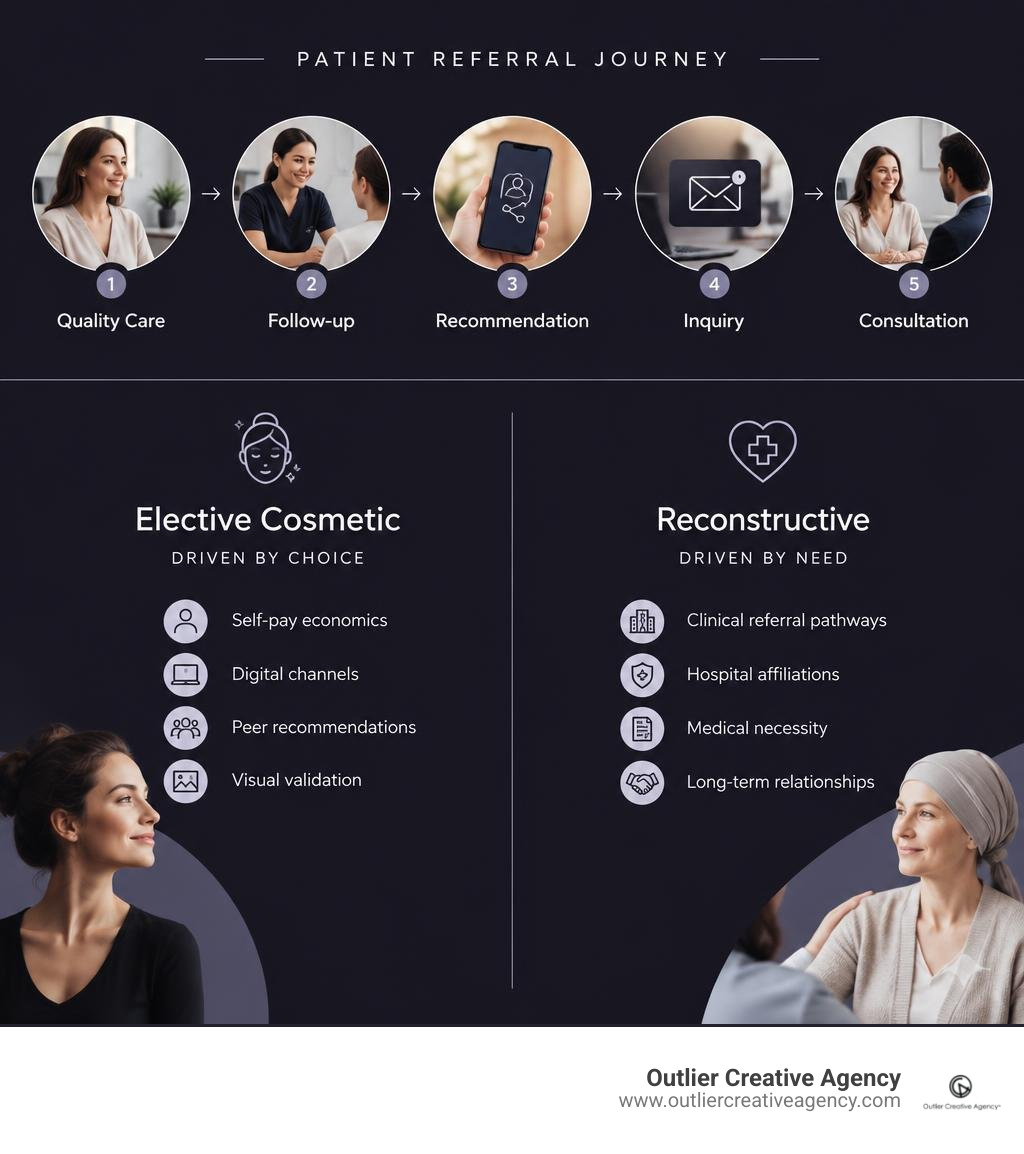
Building a reliable patient pipeline requires understanding the difference between elective aesthetic procedures and reconstructive cases. Elective cosmetic surgery relies heavily on self-pay economics, direct-to-consumer digital channels, and social validation. Patients considering breast augmentations, rhytidectomies, or abdominoplasties make decisions after personal research, peer recommendations, and visual reviews. According to the American Society of Plastic Surgeons research on patient preferences, surgeon clinical experience accounts for 36% of a patient's decision weight, while trusted personal or medical recommendations account for 21.5%. Mass media and aggressive commercial ads can actually produce negative patient sentiment.
Reconstructive surgery operates on clinical referral pathways, hospital affiliations, and medical necessity. Reconstructive cases such as post-oncologic breast reconstruction or skin cancer defect repairs depend entirely on business-to-business relationships with local medical networks. Capturing reconstructive cases gives practices consistent, insurance-reimbursed revenue that insulates them from consumer spending downturns. Many reconstructive patients return years later as elective self-pay patients.
Building B2B Physician Referral Networks
Physician-to-physician relationships require active management. Relying on casual professional connections often leads to lost referral volume when local competitors maintain dedicated outreach.
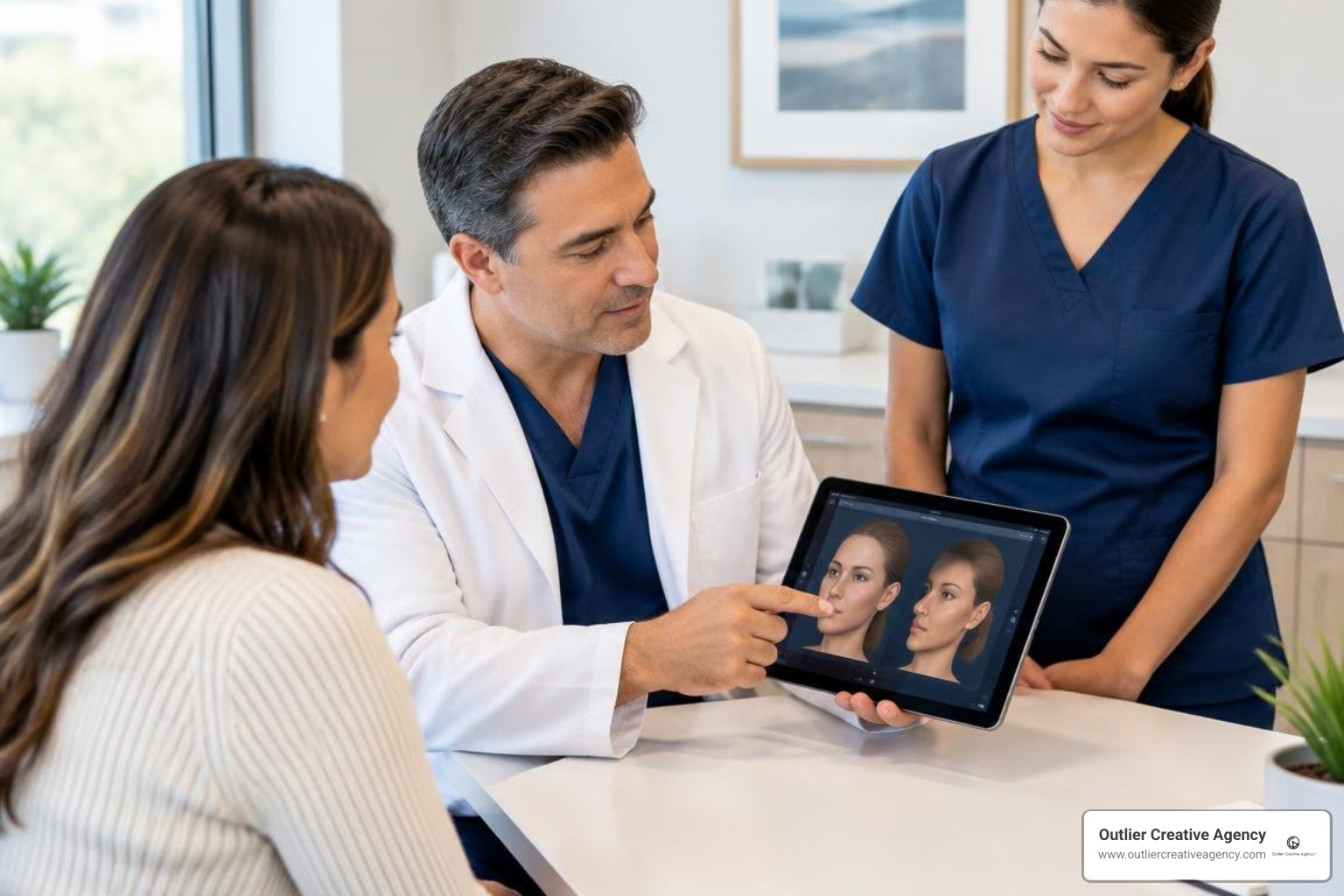
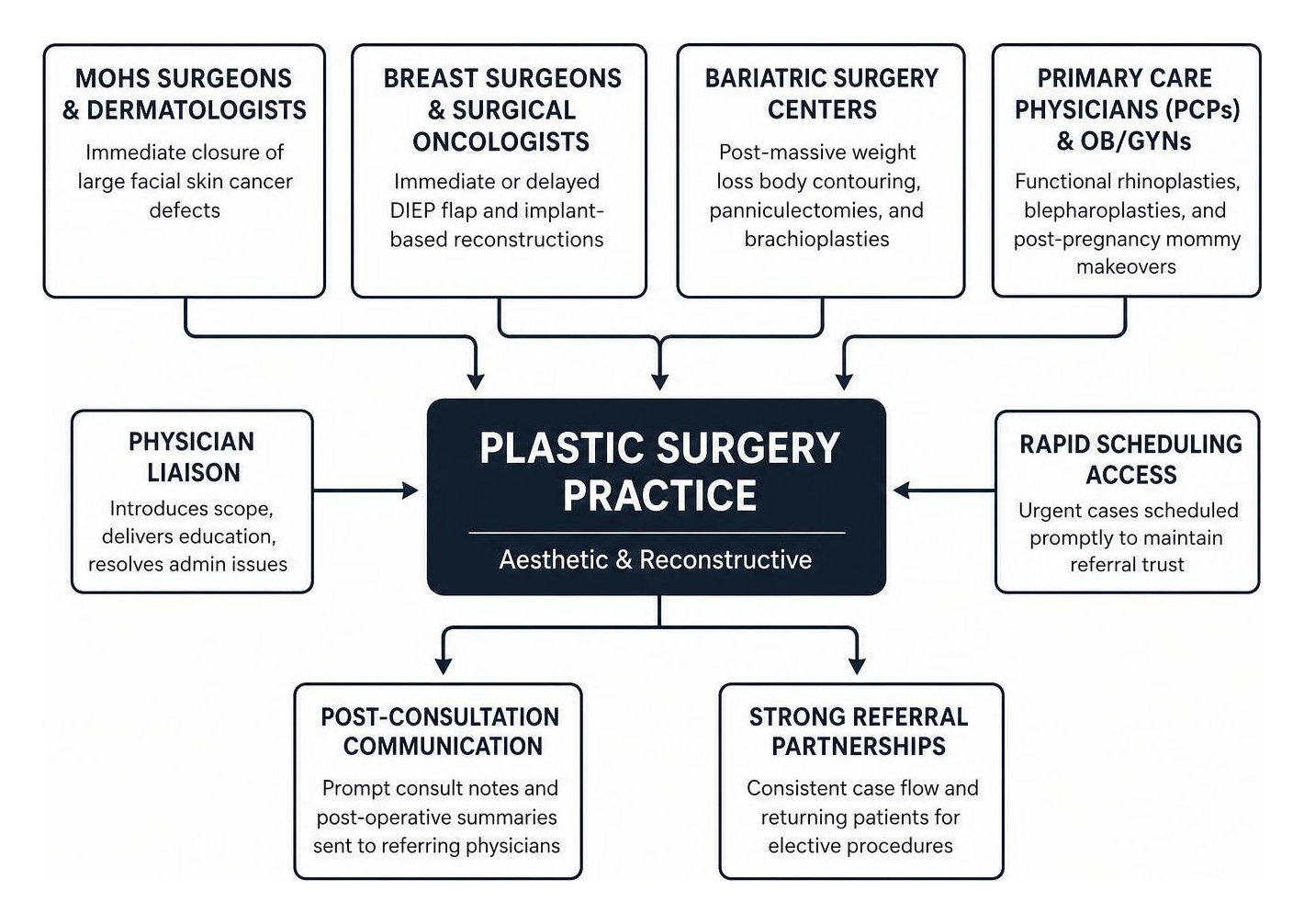
Deploying an internal or external physician liaison creates structured touchpoints with medical clinics. A liaison introduces your surgical scope, delivers clinical educational materials, and resolves administrative issues. The foundation of peer-to-peer referral retention is post-consultation communication. Sending prompt consult notes and post-operative summaries back to the referring physician confirms that their patient received attentive care.
Practices must also provide rapid scheduling access for referred patients. When a primary care provider or specialist sends an urgent case, an intake delay of even three days causes referring offices to direct future cases elsewhere.
Engaging Mohs Surgeons, Oncologists, and PCPs
Aesthetic and reconstructive practices must target specific medical specialties to build high-volume referral partnerships:
- Mohs Surgeons and Dermatologists: These specialists require surgical partners for immediate closure of large facial skin cancer defects. Providing flexible operating room time and direct communication channels ensures consistent case flow.
- Breast Surgeons and Surgical Oncologists: Multidisciplinary coordination between oncologists and plastic surgeons for immediate or delayed DIEP flap and implant-based reconstructions ensures comprehensive patient care.
- Bariatric Surgery Centers: Partnering with regional weight-loss surgery programs creates a pipeline of patients requiring post-massive weight loss body contouring, panniculectomies, and brachioplasties.
- Primary Care Physicians (PCPs) and OB/GYNs: PCPs encounter patients seeking functional rhinoplasties, blepharoplasties, and post-pregnancy mommy makeovers. Supplying PCPs with educational procedure guides helps them discuss surgical options with confidence.
Core Strategies for Plastic Surgery Referral Marketing in 2026
Modern plastic surgery marketing balances clinical peer-to-peer relationships, patient advocacy, and digital validation. While peer recommendations drive the decision to book, prospective patients still validate those recommendations by researching your practice online.
| Referral Strategy Channel | Primary Target Audience | Average Lead Conversion Rate | Typical Cost Structure | Core Practice Advantage |
|---|---|---|---|---|
| Patient Referral Programs | Satisfied former surgical patients | 36.8% | Low (Program software + incentive credits) | Highest trust factor and shortest booking timeline |
| Physician Liaison Outreach | Dermatologists, PCPs, Oncologists | 25% - 35% | Moderate ($5,000 - $15,000 monthly retainer/salary) | Reliable reconstructive volume and hospital prestige |
| Organic Search (SEO) | High-intent prospective researchers | 18.9% | Moderate (Agency retainer / content production) | Validates referred leads and captures active local searchers |
| Paid Search / Social Ads | Broad aesthetic consumers | 6.2% - 10.7% | High ($40 - $150 cost per lead + ad spend) | Immediate visibility for newly introduced procedures |
Designing Compliant Patient Referral Incentive Programs
Personal referrals convert leads to consultations at 36.8%, far outperforming paid search at 10.7% and social media ads at 6.2%. Designing an in-office referral program encourages patient advocacy while protecting your brand.
To run an effective program:
- Offer Non-Cash Value: Provide dual-sided incentives such as a $500 procedural credit toward surgical upgrades, non-surgical skincare treatments, or med spa services for both the existing patient and the friend they refer.
- Align Outreach with Recovery Milestones: Introduce referral materials when patient satisfaction is highest, typically during the 6-to-12-week post-operative follow-up when swelling resolves and results emerge.
- Equip Advocates with Digital Tools: Give patients direct referral links, shareable digital cards, and educational landing pages that explain procedures clearly.
Structuring Digital Channels for Plastic Surgery Referral Marketing
Referred prospects will research your website, read reviews, and view surgical galleries before calling your office. Integrating digital support ensures these leads convert into consultations:
- Automated Review Collection: Implement SMS workflows to collect verified reviews on your Google Business Profile, RealSelf, and Healthgrades 1 to 2 weeks post-treatment. Over 84% of consumers trust online reviews as much as personal recommendations.
- Dedicated Referral Landing Pages: Build fast, mobile-friendly landing pages specifically designed for prospective patients referred by peers or physicians.
- Educational Email Sequences: Use segmented email drip campaigns to deliver procedure guides, recovery timelines, and surgeon credentials to referred leads who are not yet ready to book. Quality email marketing generates an average return of $42 for every dollar spent.
- Local Search Optimization: Maintain localized practice citations and structured schema markup through targeted medical SEO so referred patients find your primary office location immediately.
Legal, Ethical, and Compliance Standards for Aesthetic Referrals
Aesthetic practices must navigate state and federal healthcare advertising laws when generating referrals. Violating these rules creates serious regulatory risks and endangers medical licenses.

Practices accepting Medicare, Medicaid, or other federal healthcare programs must comply strictly with the federal Anti-Kickback Statute and the Stark Law. These statutes prohibit offering financial remuneration, gifts, or kickbacks in exchange for patient referrals. Even for pure cash-pay cosmetic practices, state medical boards enforce strict prohibitions against fee splitting and professional kickbacks. Never pay cash commissions or direct referral fees to external physicians, medical spas, or individual referrers. Instead, use compliant loyalty perks, service vouchers for non-reimbursed services, or structured mutual educational partnerships.
Maintaining HIPAA and FTC Compliance with Before-and-After Imagery
Before-and-after photo galleries are essential for validating referrals. However, publishing patient outcomes requires strict compliance workflows:
- Signed HIPAA Photo Releases: Secure explicit, written consent forms detailing where and how patient images will be shared, including websites, social media, and printed collateral. General medical consent forms are legally insufficient for marketing use.
- FTC Truth-in-Advertising Rules: Federal Trade Commission guidelines mandate that all marketing imagery accurately represent real surgical results. Never use digital editing, slimming filters, or deceptive camera angles to exaggerate surgical outcomes.
- Standardized Lighting and Positioning: Take pre-operative and post-operative photos using matching backgrounds, consistent focal lengths, neutral expressions, and identical lighting to maintain clinical authenticity.
- Board Certification Disclosures: State advertising rules require clear credential transparency. Clearly state whether the operating surgeon is certified by the American Board of Plastic Surgery rather than using ambiguous terms like cosmetic specialist.
Measuring ROI and Optimizing the Referral Pipeline
Industry benchmarks indicate that high-growth plastic surgery practices allocate 10% to 15% of gross revenue to marketing. Conservative practices spend 1% to 5%, averaging around $15,000 annually. To maximize returns, practices must track channel performance across the entire patient acquisition funnel.
Empirical studies published on conversion rates in facial plastic surgery practices demonstrate that web-based and direct word-of-mouth channels convert at comparable rates, with patient age and initial procedural intent serving as the main predictors of surgery booking rates.
Key Performance Metrics for Plastic Surgery Referral Marketing Programs
Track your marketing pipeline using these core performance metrics:
- Cost Per Acquisition (CPA): Divide total channel spend by the number of booked surgical cases. Referral programs typically yield the lowest CPA of any patient acquisition channel.
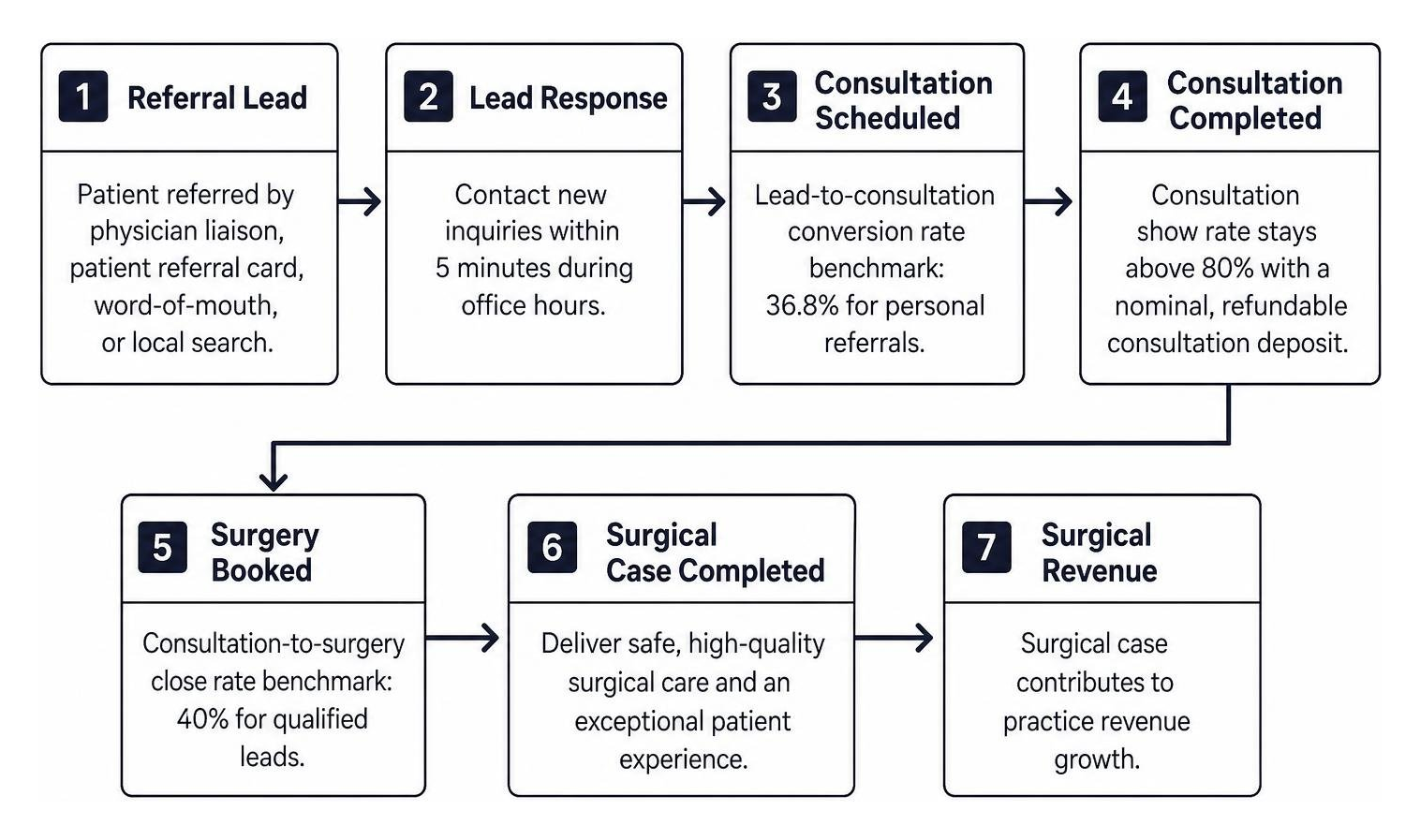
- Lead-to-Consultation Conversion Rate: Measure the percentage of raw inquiries that schedule an initial consultation. Personal referrals achieve a 36.8% benchmark, while SEO converts at 18.9%.
- Consultation Show Rate: Track the percentage of scheduled consultations that attend their appointment. Collecting a nominal, refundable consultation deposit keeps show rates above 80%.
- Consultation-to-Surgery Close Rate: Measure the percentage of completed consultations that schedule a procedure, with 40% serving as the industry benchmark for qualified leads.
- Referral Source Tracking: Use your practice CRM to tag every patient record with their original source, tracking whether they came from a specific physician liaison visit, a patient referral card, or local search.
Speed-to-Lead Protocols and Consultation Conversion
Even strong personal referrals will look elsewhere if your front-office response is slow. When a referred prospect reaches out online or by phone, follow-up speed determines whether they schedule.
- Five-Minute Response Windows: Contact new digital inquiries within five minutes during office hours. Contacting leads within this window increases consultation scheduling rates.
- Add Intentional Form Friction: High-ticket surgical procedures benefit from qualifying questions on web intake forms. Inquire about the patient's preferred procedure, anticipated timeline, and interest in patient financing to filter out casual browsers and help coordinators prioritize serious candidates.
- Financing Pre-Qualification: Display patient financing solutions and estimated monthly payments directly on confirmation pages and follow-up emails. Transparent financing options reduce price hesitation before the consultation occurs.
Conclusion
A successful plastic surgery practice requires both surgical skill and reliable patient acquisition systems. While broad advertising builds general brand awareness, structured referral networks provide high-intent, profitable cases for both elective cosmetic and reconstructive procedures.
Building these systems takes time and consistency. By combining compliant patient advocacy programs, professional physician liaison outreach, and structured digital validation, your practice can build a predictable patient pipeline.
Outlier Creative Agency builds custom marketing systems, technical SEO platforms, and patient acquisition strategies for premier aesthetic medical practices and surgical clinics. Connect with our team today to schedule a strategic consultation and evaluate your practice's growth opportunities.
References
Khosla AS, Zeitouni F, Laning EK, Tierney M, Attaluri PK, Rao VK. "Marketing a Plastic Surgery Practice: Strategies, Insights, and Practical Considerations.." Plastic and reconstructive surgery. Global open, 2026. PMCID PMC13542058. Abdolalizadeh P, Kashkouli MB, Gandomi-Mohammadabadi A, Jafarpour S, Karimi N, Abri Aghdam K. "Conversion Rate of Web-based Versus Non-web-based Patient Referral Sources in a Facial Plastic Surgery Practice.." Ophthalmic plastic and reconstructive surgery, 2022. PMID 33927173.
Frequently Asked Questions About Aesthetic Practice Referrals
How do conversion rates for word-of-mouth compare to digital ads?
Word-of-mouth and personal referrals achieve an average lead-to-consultation conversion rate of 36.8%. This is nearly double the conversion rate of organic search (18.9%) and triple that of paid search advertising (10.7%). Personal referrals arrive with pre-established trust, clear expectations from seeing real-world outcomes, and lower price sensitivity, resulting in shorter sales cycles and higher procedure close rates.
Can plastic surgery practices offer financial incentives for referrals?
Aesthetic practices must exercise caution regarding referral incentives. Under federal Anti-Kickback statutes and state medical board fee-splitting rules, paying direct cash fees to physicians or patients for clinical referrals is strictly prohibited. However, practices can offer non-monetary incentives for self-pay elective services. Compliant options include med spa service vouchers, skincare product gifts, or loyalty credits applied toward future elective treatments, provided they comply with local state medical regulations.
How much should a cosmetic surgery clinic budget for referral marketing?
Established plastic surgery practices typically allocate 10% to 15% of gross revenue to their overall marketing strategy, while practices focused primarily on maintenance may spend 1% to 5%. For referral-specific marketing, budget allocations commonly include software for patient advocacy tracking ($300 to $1,000 monthly) and dedicated physician liaison outreach ($5,000 to $15,000 monthly for specialized agency management or staff salaries).
What educational content best supports reconstructive referrals from oncologists and PCPs?
Referring medical specialists respond best to objective, peer-to-peer clinical documentation rather than consumer advertising. Provide referring offices with laminated flap-selection pathways, post-bariatric body contouring guidelines, recovery timelines, and direct coordinator contact cards. Supplying standard digital intake order sheets makes patient handoffs fast and efficient for external clinical teams.