
Build patient trust and book consultations with ethical cosmetic surgery Instagram marketing that turns followers into booked appointments.
How Cosmetic Surgery Instagram Marketing Builds Reach and Trust
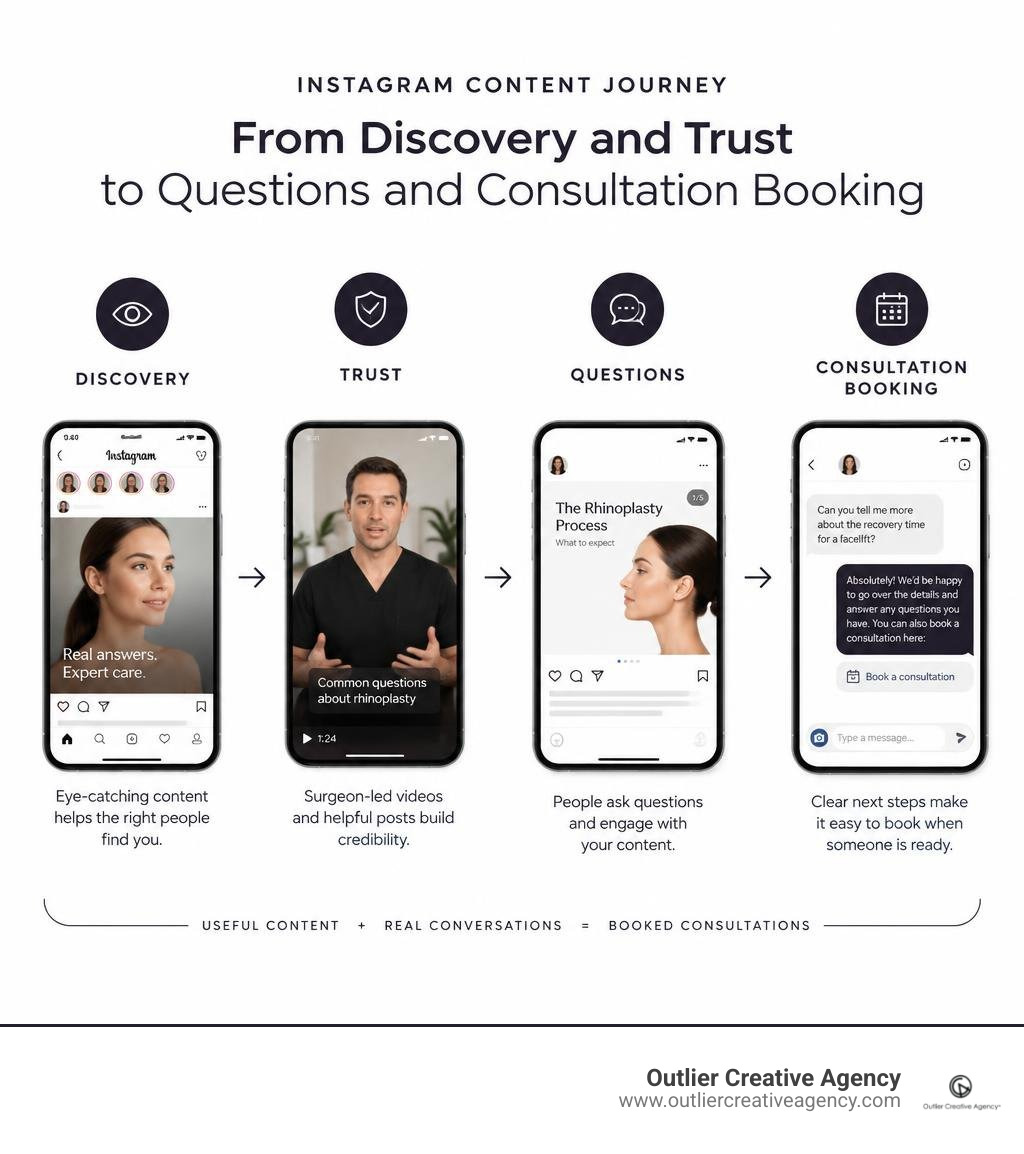
For cosmetic surgery Instagram marketing, start with a profile that makes your surgeon's credentials and booking link easy to find. Then post short, surgeon-led videos that answer common questions, use carousels to explain procedures and recovery, and share patient results only with proper consent. Reply to comments and DMs promptly. This gives people useful information as they research and a clear way to book when they are ready.
Reach matters, but booked consultations tell you whether your content is working. Track which posts bring qualified questions, profile visits, and appointments rather than judging success by follower count alone.
I'm Corey Larson. At Outlier Creative Agency, my work in video, social media, and clear professional communication shapes this approach to cosmetic surgery Instagram marketing: earn trust first, then make the next step easy.
Fundamentals of Cosmetic Surgery Instagram Marketing in 2026
Modern cosmetic surgery patients research extensively before stepping foot into an aesthetic clinic. In fact, prospective patients spend an average of 8 to 12 weeks researching procedures before making an inquiry, with roughly 80% actively relying on Instagram to evaluate surgical techniques, results, and clinic authority.
Success requires aligning your clinical expertise with the latest algorithm signals. Instagram prioritizes original storytelling, meaningful direct message conversations, and high share counts over passive video views. The platform's ranking algorithms reward practices that foster active community engagement.
Building an authoritative presence starts with clear plastic surgery marketing strategies that spotlight your board certifications, surgical artistry, and clinical safety standards. Data published in The New Era of Marketing in Plastic Surgery - PMC reveals that while social media strongly influences up to 40% of cosmetic patients when selecting a surgeon, only 4% of plastic surgery posts on social platforms originate from board-certified practitioners eligible for membership in major professional societies. Highlighting verified credentials instantly separates your practice from non-certified injectors and cosmetic practitioners.
Optimizing Your Credential-Forward Profile and Bio
Your Instagram bio serves as your clinic digital front door. Approximately 19% of cosmetic patients actively use social profiles to verify surgeon credentials before reaching out. If your bio lacks clarity, prospective patients quickly bounce to competing practices.
An optimized profile must bridge this trust gap immediately:
- Clearly state board certifications, specialized fellowship training, and recognized medical society affiliations.
- Specify physical clinic locations in target metro markets such as Austin, Texas or Los Angeles, California.
- Organize pinned Story Highlights into logical categories: Procedure FAQs, Recovery Timelines, Facility Tours, and Surgeon Credentials.
- Include a frictionless call to action that directs visitors to a HIPAA-compliant consultation request form.
Practices that redesign their profiles around transparency and clinical authority routinely experience measurable lifts in inbound inquiries, a trend demonstrated in academic analysis on how to grow your brand on Instagram.
Establishing an Algorithm-Ready Weekly Posting Cadence for Cosmetic Surgery Instagram Marketing
Posting daily filler content dilutes engagement and exhausts your staff. The algorithm rewards consistency and depth over sheer volume. Aesthetic clinics publishing 3 to 4 high-quality Reels per week consistently outperform practices that post low-effort daily updates.
Short-form video generates roughly 1,200% more shares than static posts, making it the primary driver of top-of-funnel reach. Educational carousel posts and high-resolution clinical images serve middle-of-funnel prospects who want in-depth surgical explanations.
| Format | Recommended Weekly Cadence | Primary Algorithm Objective | Conversion Role in Funnel |
|---|---|---|---|
| Reels (Short-Form Video) | 3-4 posts per week | Shares, Watch Time, Top-of-Funnel Discovery | Builds awareness, introduces surgeon bedside manner |
| Multi-Slide Carousels | 2-3 posts per week | Saves, Dwell Time, Profile Clicks | Explains procedural anatomy, recovery steps, candidates |
| Static Images & Before/Afters | 1-2 posts per week | Profile Visits, Direct Saves | Visual proof of outcome quality, closes research phase |
| Daily Stories & Interactive Polls | 3-5 stories daily | Direct Message Replies, Link Clicks | Nurtures warm prospects, drives direct consultation leads |
Content Pillars That Build Trust and Drive Consultations
Patient acquisition in aesthetic medicine requires balancing visual clinical proof with patient privacy and education. Content that focuses purely on sales pitches drives high unfollow rates. Educational content increases consultation bookings by 33%, providing prospective patients with the procedural clarity needed to book a surgical evaluation.
Ethical Before-and-After Protocols and HIPAA Compliance
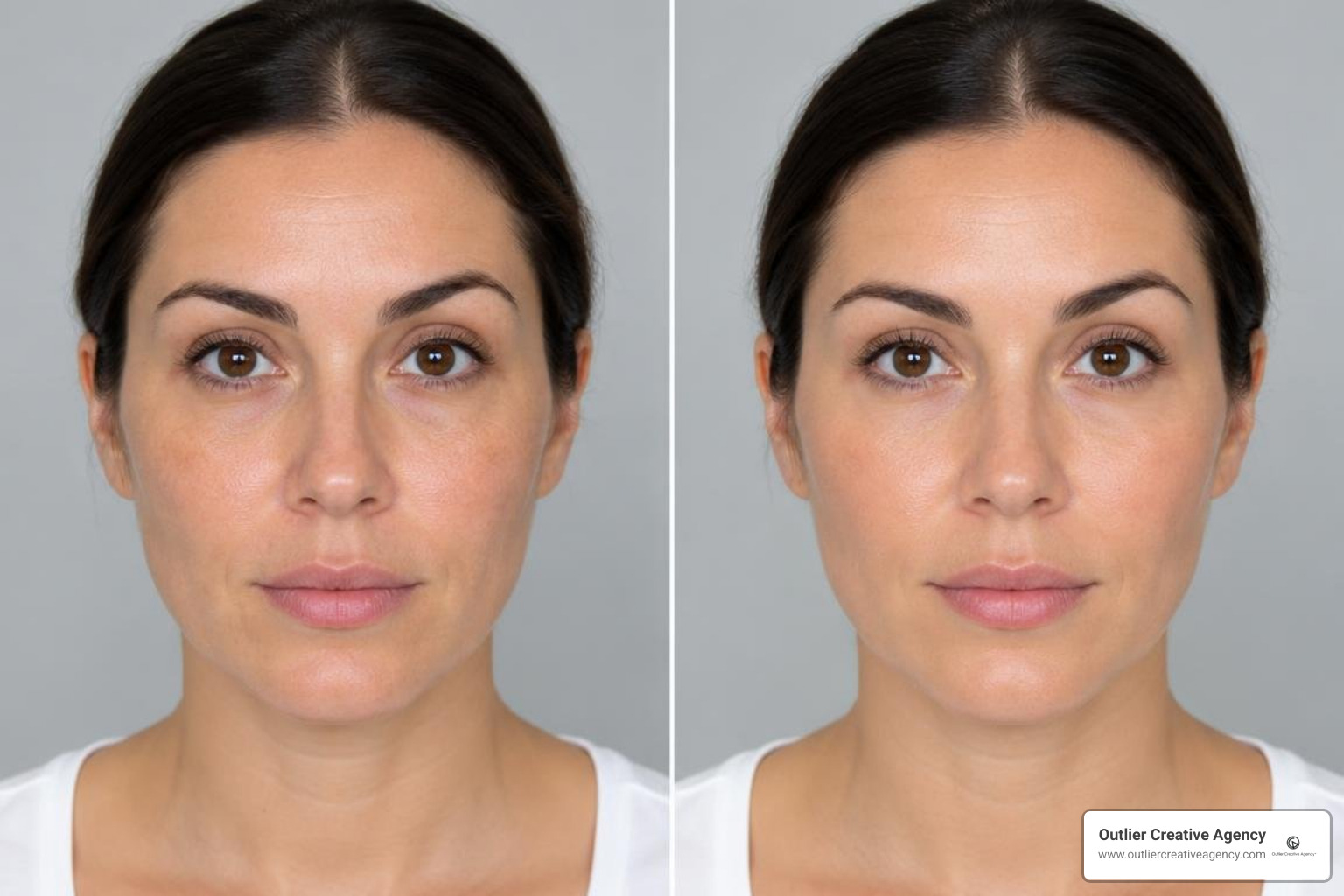
Before-and-after imagery remains the most influential asset in cosmetic surgery marketing, yet it carries the highest regulatory and ethical risks. Studies show that 70.8% of cosmetic surgery before-and-after posts display postoperative bias through altered lighting, flattering angles, makeup, or intentional posing (Shauly et al., 2023). Savvy patients notice these discrepancies, which damages clinic credibility.
To build genuine patient trust, maintain a rigid clinical standardization protocol:
- Capture both preoperative and postoperative photos with matching studio lighting, identical camera focal lengths, neutral backgrounds, and unposed anatomical positioning.
- Comply fully with Federal Trade Commission (FTC) guidelines by avoiding altered imagery, unrepresentative results, or misleading claims regarding typical recovery periods.
- Secure a dedicated, written social media consent form from every featured patient. Standard surgical consent forms do not grant legal permission to publish identifiable health information on public digital channels.
Surgeon-Led Educational Reels and Video Production
A surgeon personal presence on camera creates an immediate connection with prospective patients. Videos showcasing the surgeon in professional clinical attire explaining procedural mechanics yield significantly higher engagement and trust metrics.
Surgeons can effectively answer real patient questions, break down intraoperative safety measures, and walk through expected recovery journeys. Investing in specialized medical video production helps practices present complex surgical concepts with crystal-clear audio, dynamic graphics, and cinematic polish. Highlighting authentic surgical expertise on camera humanizes the practice, reinforcing why surgeons succeed on Instagram when delivering educational value.
Age-Specific Content Strategies Across Demographic Tiers
Cosmetic surgery patients have distinct goals and communication preferences depending on their stage of life. A modern social strategy segments content across demographic tiers:
- Ages 18 to 35: This group represents the highest engagement on Instagram Reels and TikTok. Primary procedure interests include primary rhinoplasty, breast augmentation, and preventative aesthetic treatments. Content should focus on natural aesthetic balance, recovery vlogs, and transparent pricing ranges.
- Ages 36 to 55: Active across Instagram and Facebook. Common procedures include liposuction, mommy makeovers, abdominoplasty, and non-surgical facial rejuvenation. Video content addressing downtime management, surgical safety, and long-term maintenance performs best.
- Ages 56 and Older: Highly active on Facebook and Instagram Stories. Primary procedures include deep-plane facelifts, neck lifts, and blepharoplasty. Content should highlight facial anatomy restoration, surgeon credentials, and long-term surgical longevity.
Coordinating your demographic strategy through comprehensive healthcare social media management ensures every content piece addresses the exact concerns of your target patient base.
Converting Views into Consultations with DM Automation and Paid Meta Ads
Attracting profile views produces zero revenue if your practice cannot capture and qualify leads in real time. Instagram direct messaging has emerged as the premier conversion channel for aesthetic practices, boasting open rates near 90% compared to roughly 20% for traditional email marketing.
Setting Up High-Converting Comment-to-DM Systems in Cosmetic Surgery Instagram Marketing
A lead response time is the single greatest variable dictating consultation conversion. Responding to a prospective patient inquiry within 5 minutes makes that lead 21 times more likely to convert compared to responding after 30 minutes.
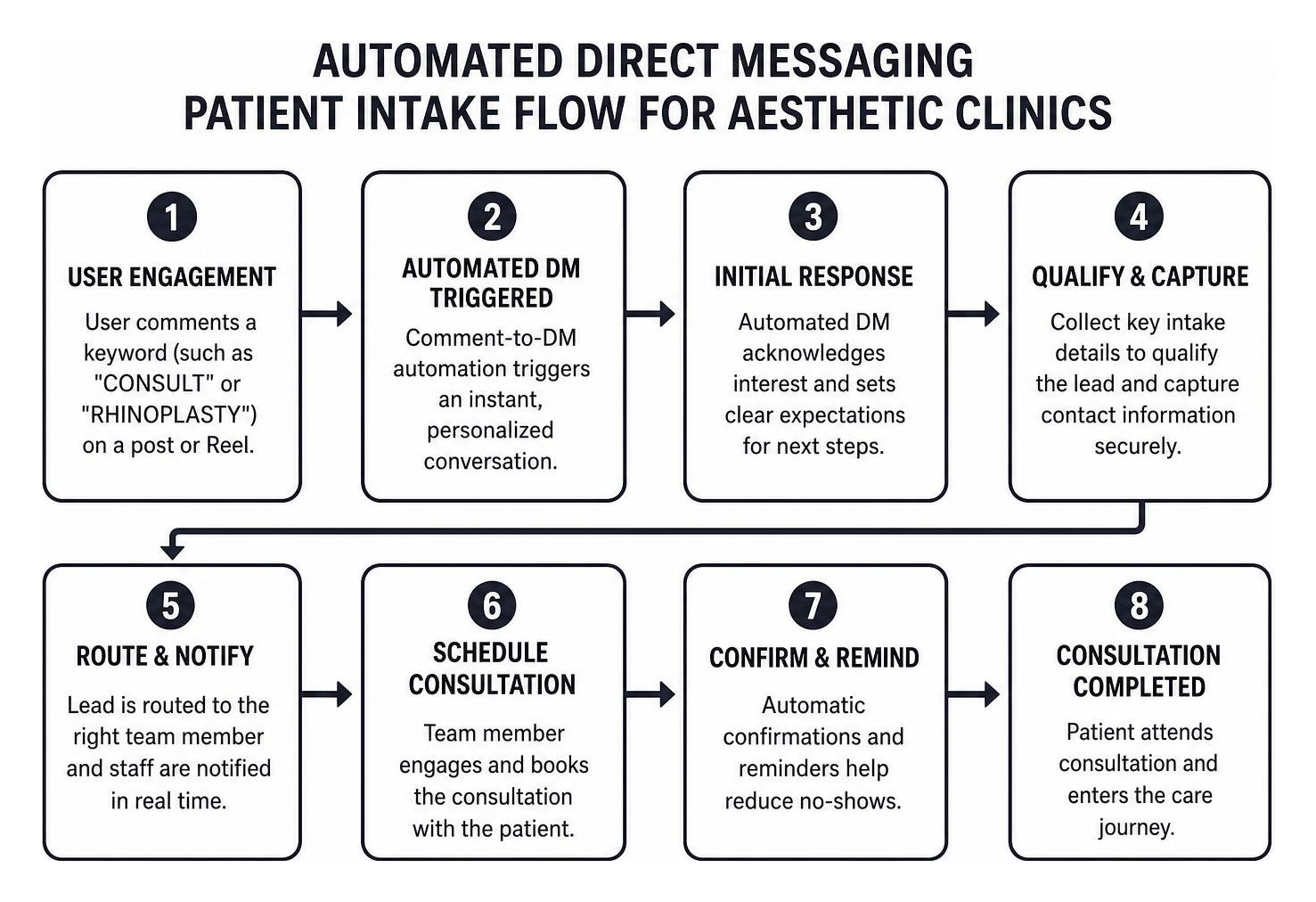
Comment-to-DM automation software allows aesthetic practices to trigger instant, personalized conversations whenever a user comments a specific keyword (such as "CONSULT" or "RHINOPLASTY") on a post or Reel.
The automated intake sequence should:
- Deliver the requested educational guide, procedure checklist, or pricing overview immediately.
- Ask 2 to 3 qualifying questions regarding procedural timeline and geographic location.
- Offer an automated link to schedule a paid surgical consultation or speak directly with the patient coordinator.
Clinics leveraging direct messaging automation achieve substantial cost efficiencies and higher engagement volumes, as highlighted in this case study on Instagram messaging efficiency.
Navigating 2026 Meta Ad Policies and Paid Campaigns
Meta advertising policies enforce strict regulations around medical aesthetics, body image, and personal health attributes. Direct before-and-after comparisons that focus excessively on specific body parts or imply physical imperfection frequently trigger automated ad rejections or account penalties.
To maintain compliant, scalable paid campaigns:
- Structure ads around educational video hooks, patient journey testimonials, and surgeon credentials rather than dramatic side-by-side zoomed images.
- Deploy custom lookalike audiences built from your existing, verified patient lists. Lookalike audiences reduce cost per consultation appointment by 35% to 50% compared to cold interest-based targeting.
- Expect average cosmetic surgery cost per lead (CPL) to range between $100 and $300 in competitive regional markets, and between $200 and $500 in major metropolitan hubs like Los Angeles.
Applying these proven plastic surgeon marketing tips protects your ad accounts from costly policy disruptions while delivering predictable patient acquisition.
Integrating Instagram with Multi-Channel Funnels and Measuring ROI
Instagram should not operate as an isolated marketing channel. Maximizing practice revenue requires connecting your social media presence with high-intent search campaigns, automated email workflows, and clinic phone tracking systems.

Tracking Key Metrics from DM-to-Consultation to Cost Per Lead
Vanity metrics like follower counts and post likes do not reflect clinic profitability. Aesthetic practices must track concrete commercial metrics across the entire patient acquisition journey.
Essential metrics to monitor weekly include:
- DM-to-Consultation Conversion Rate: The percentage of inbound message threads that result in a booked surgical consultation (target benchmark: 10% to 18%).
- Average Initial Response Time: The speed at which your automated systems and patient coordinators engage new leads (target: under 5 minutes).
- Cost Per Booked Appointment: Total marketing spend divided by confirmed consultation appointments.
- Consultation-to-Surgery Close Rate: The percentage of completed consultations that convert into booked surgical procedures.
Our plastic surgery internet marketing guide outlines the call tracking and dynamic attribution models required to tie individual social posts directly to closed surgical revenue.
Combining Instagram Paid Ads with Search and Referral Networks
While personal referrals convert to consultations at roughly 36.8% and search-driven organic leads convert at 18.9%, Meta Ads average a 6.2% cold conversion rate. However, when Google search ads and Meta remarketing campaigns run simultaneously, overall cost per appointment drops by 30% to 40%.
Prospective patients who first discover your practice through Google Search can be retargeted on Instagram with surgeon-led educational videos and patient testimonials. This multi-touch approach reinforces practice authority throughout the patient research phase, accelerating the decision to book a consultation.
Conclusion
Building a high-converting social media presence requires more than aesthetic feed curation. By pairing ethical before-and-after standards and surgeon-led video education with sub-five-minute DM automation, your practice can transform casual profile visitors into loyal surgical patients.
At Outlier Creative Agency, we design data-backed acquisition systems tailored specifically for aesthetic medical practices and plastic surgeons. If you are ready to scale your patient inquiries while maintaining uncompromising clinical ethics, explore our comprehensive plastic surgery marketing solutions and book a strategic consultation with our team.
Frequently Asked Questions About Aesthetic Clinic Social Media
How quickly should an aesthetic practice respond to Instagram DMs?
Practices should respond to all direct messages within 5 minutes. Leads engaged within this window are 21 times more likely to book a consultation than those contacted after 30 minutes. Deploying automated messaging workflows ensures immediate triage and qualification even outside standard clinical operating hours.
Do plastic surgeons need a separate social media consent form?
Yes. Standard surgical consent forms do not provide legal authorization under HIPAA or state privacy laws to publish patient images on public marketing channels. Clinics must utilize a standalone, signed social media release form that outlines exactly where and how patient media will be displayed.
What should a practice do if Meta rejects its cosmetic surgery ads?
If Meta flags your ads, shift your creative approach from direct body-focused before-and-after imagery toward surgeon-led educational videos and patient video testimonials. Ensure copy focuses on clinical safety, surgical technique, and physician credentials rather than idealized physical modifications.