

Discover proven plastic surgeon marketing ideas to attract patients, boost conversions, and grow your aesthetic practice with data-driven strategies.
Understanding the Aesthetic Patient Journey and Demographics
To generate qualified patient consultations and grow surgical revenue, modern plastic surgeon marketing ideas focus on multi-channel acquisition: dominating local SEO in the Google Maps 3-pack, deploying high-intent Google PPC search campaigns, publishing interactive before-and-after photo galleries, sharing founder-led surgeon video education, and implementing automated email and SMS lead follow-up. Successfully capturing aesthetic demand requires aligning your clinical offerings with precise patient demographics and a focused plastic surgery marketing strategy.
Industry projections show the global cosmetic surgery market climbing toward $93.4 billion by 2030. In 2026, roughly 68% of American adults report they would consider a cosmetic procedure, up substantially from 51% in 2022.
Historically, aesthetic marketing focused almost exclusively on women. While women still account for approximately 90% of all surgical cosmetic procedures, male interest has surged dramatically. Procedures among male patients increased by over 106% in recent years, spanning gynecomastia correction, jawline contouring, and blepharoplasty.
The core demographic for surgical intervention remains patients aged 40 to 54. These individuals typically possess the financial stability to invest in surgical facial rejuvenation, abdominoplasty, and deep plane facelifts. However, younger demographics aged 25 to 39 are driving massive growth in preventative aesthetics, rhinoplasty, and combination treatments. Many practices cross-pollinate surgical leads with non-surgical treatments by adapting their cosmetic dermatology marketing to capture patients earlier in their aesthetic lifecycle.
Income distribution data also challenges long-standing assumptions. Only 13% of prospective cosmetic surgery patients report household incomes exceeding $90,000. The vast majority represent middle-income earners who plan meticulously for their procedures. Because price transparency, trust, and financing options dictate where these patients book, your marketing must eliminate friction at every stage of their evaluation (Shauly et al., 2023).
Age-Specific Social Media Channel Selection
Different age brackets research cosmetic surgery through entirely different digital environments. A generic, one-size-fits-all social media campaign wastes budget and misses high-intent inquiries.
- Ages 18 to 34: These prospective patients evaluate practices predominantly on Instagram, TikTok, and YouTube Shorts. They look for educational procedure breakdowns, recovery vlogs, and relatable surgeon interactions. Focus on breast augmentation, rhinoplasty, and non-surgical injectables.
- Ages 35 to 55: This segment spends substantial time across Instagram and Facebook. They prioritize clinical expertise, safety credentials, board certifications, and comprehensive facial or body rejuvenation over viral audio trends.
- Ages 55 and Above: Facebook remains the dominant platform for patients exploring blepharoplasty, neck lifts, and deep plane facelifts. These prospective patients favor static, clear before-and-after photo galleries and detailed, long-form written explanations.
Adopting modern social media video tactics allows your surgeons to present complex anatomical concepts in accessible short-form formats, establishing deep rapport before a prospect ever steps into the clinic.
Overcoming the Trust Gap with Visual Proof
Prospective patients enter your website with natural skepticism. Data indicates that nearly 75% of online visitors will refuse to consider a medical practice that lacks an accessible before-and-after photo gallery.
To convert qualified traffic, your visual galleries must function as interactive case studies rather than basic image folders. High-converting practices group results by patient persona (such as post-pregnancy restoration, active male contouring, or mature facial aging) rather than purely by clinical procedure codes.
Integrating mobile-friendly, interactive image sliders and multi-angle views directly on your landing pages allows prospects to examine subtle healing outcomes. Premium medical web design ensures these visual galleries load instantly, display clear consent-backed medical disclaimers, and drive visitors directly into consultation booking workflows.
High-ROI Plastic Surgeon Marketing Ideas for Modern Practices
Aesthetic clinics frequently burn capital on unproven marketing experiments. Building a predictable surgical schedule requires focusing resources on channels with proven cost-per-acquisition (CPA) and patient lifetime value (LTV) metrics.
In mature practices, the average three-year patient lifetime value reaches approximately $12,500 when surgical clients return for ongoing medical spa maintenance and non-surgical touch-ups.
| Marketing Channel | Average Conversion Rate | Typical Patient Acquisition Cost (CPA) | Strategic Strengths |
|---|---|---|---|
| Email & SMS Automation | 15.0% - 22.0% | $15 - $45 | Returns $43 per $1 spent; reactivates dormant leads |
| Organic Local Search (SEO) | 18.9% | $180 - $220 | High clinical intent; dominates Google Maps 3-pack |
| Google Search Ads (PPC) | 10.7% | $550 - $650+ | Immediate search presence for high-volume surgical terms |
| Paid Social Ads (Meta/TikTok) | 3.2% - 6.5% | $300 - $480 | Visual awareness; retargeting gallery visitors |
| Patient Referral Systems | 22.0% | $25 - $60 | Highest consult close rate; built-in social proof |
Organic Search and Plastic Surgeon Marketing Ideas for Local Visibility
Organic search generates significantly higher lead conversion rates (18.9%) than paid search ads (10.7%) because searchers inherently trust earned rankings. Local search optimization captures patients right when their intent is highest.
Between 42% and 44% of all local clicks for cosmetic surgery queries go directly to the Google Maps 3-pack. Dominating this visual real estate requires:
- Google Business Profile (GBP) Precision: Maintain complete primary categories (such as Plastic Surgeon or Cosmetic Surgeon) and secondary categories (such as Medical Spa or Facial Plastic Surgeon).
- Geo-Targeted Procedure Hubs: Build deep, clinically accurate procedure pages optimized for specific geographic markets, integrating dedicated schema markup.
- Active Review Velocity: Consistently gather authentic patient reviews that mention specific treatments and recovery experiences.
Deploying comprehensive medical SEO secures sustainable map pack rankings, keeping patient acquisition costs around $200 compared to $610 or more on competitive paid ad auctions.
High-Converting PPC and Search Advertising Campaigns
While organic search builds long-term equity, Google Ads campaigns capture immediate consultation volume for high-margin procedures such as mommy makeovers, rhinoplasty, and facelift surgery.
A high-performing campaign relies on precise negative keyword sculpting. You must aggressively filter out terms such as "cheap," "cost per hour," "pictures of scars," and "free consults." Route all ad traffic to dedicated, conversion-focused landing pages rather than your standard homepage.
Using structured medical PPC strategies ensures your ad spend targets high-intent queries, keeps cost-per-click under control, and drives measurable consultation volume.
Video Testimonials and Surgeon Authority Content
Aesthetic surgery carries real emotional weight and perceived physical risk. Prospective patients must trust your surgeon's hands implicitly before booking an invasive operation. Incorporating authentic video testimonials into your digital funnel increases prospective patient trust by 52%, lifting consultation bookings by up to 34%.
Surgeon authority content does not require complex cinematography. Short, founder-led video explanations shot in clinical attire build immediate credibility.
- Address candidate criteria: explain why certain patients are turned away.
- Showcase recovery timelines: break down what swelling looks like at day 7 versus month 3.
- Answer common consultation questions directly on camera.
Leveraging expert medical production alongside structured social video hooks allows your practice to demystify complex operations while showcasing genuine patient transformations.
Converting Consultations and Retaining Aesthetic Patients
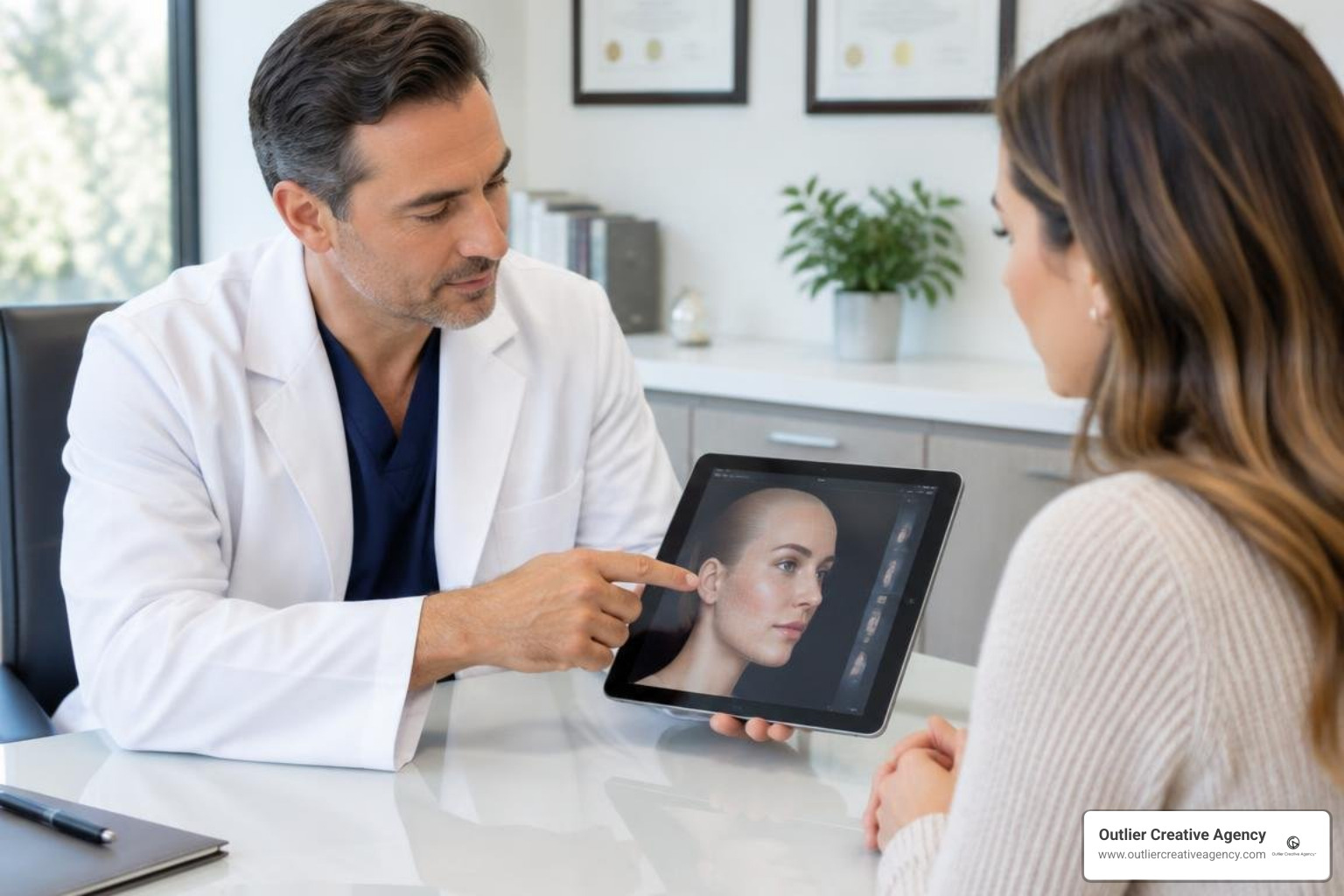
Driving consultation requests is only half the battle. If your front desk team struggles with intake or your calendar is filled with unqualified price shoppers, your operational profitability drops.
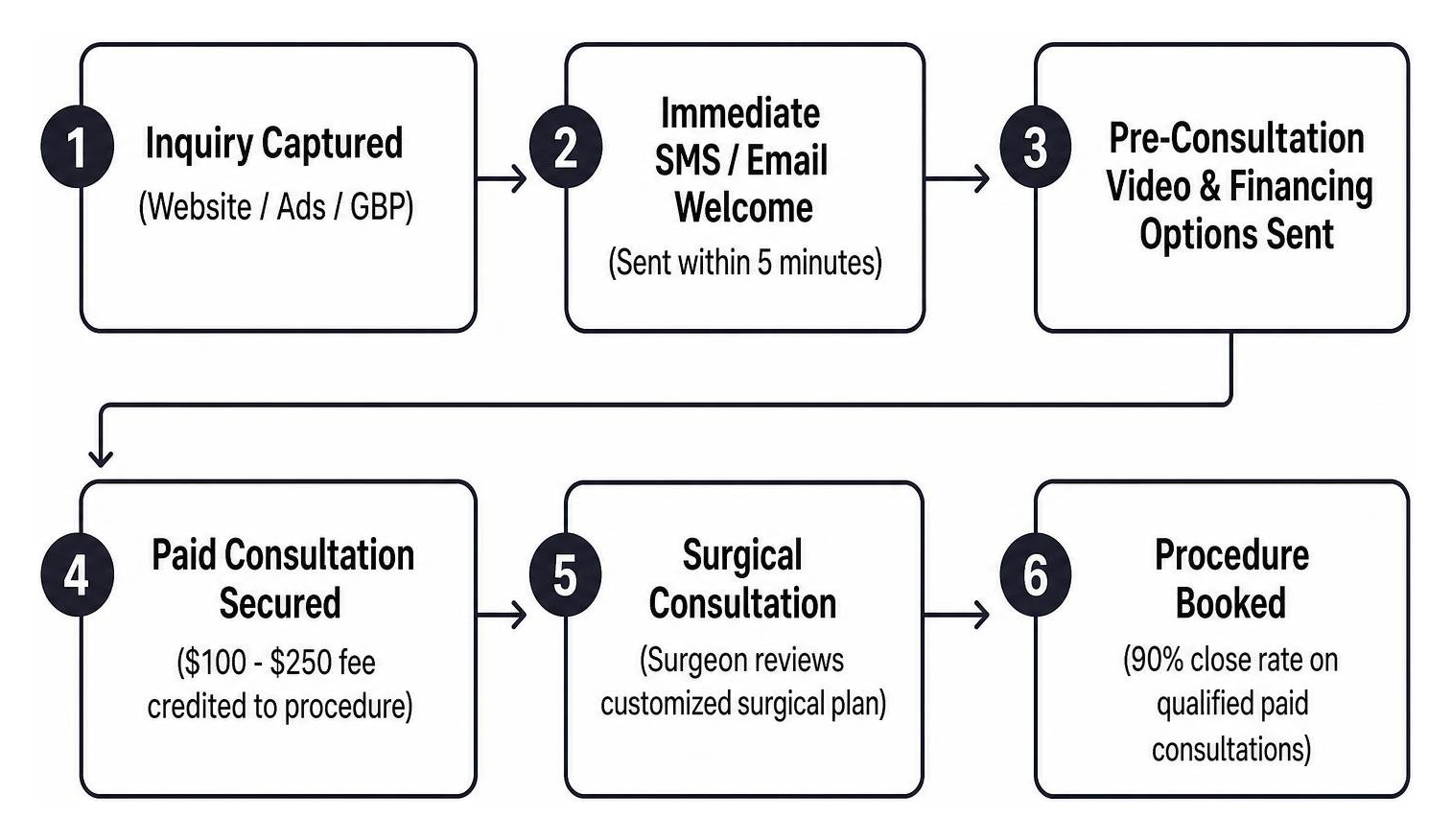
Paid Consultation Models vs Free Consultations
Many cosmetic clinics fear that charging an upfront consultation fee will deter inquiries. However, empirical conversion data demonstrates the opposite effect on bottom-line revenue.
- Free Consultations: Historically close at approximately 40%, experience high no-show rates (20% to 35%), and consume valuable clinical time with unqualified price shoppers.
- Paid Consultations ($100 to $250): Close at roughly 90% into scheduled surgeries, virtually eliminate no-shows, and elevate your perceived surgical authority.
When you credit the consultation fee toward the patient's eventual procedure, you remove financial friction while filtering out uncommitted leads. Qualified patients view the fee as an investment in professional medical evaluation.
Data-Driven Plastic Surgeon Marketing Ideas for Patient Retention
Email marketing represents the highest-ROI channel available to aesthetic practices, returning an average of $43 for every $1 invested.
Most cosmetic practices make the mistake of sending generic monthly newsletters. High-performing clinics implement automated, behavior-triggered nurture sequences:
- Rapid Lead Response: A 3-part automated email and SMS sequence delivered within 5 minutes of inquiry submission.
- Pre-Consultation Education: Sending recovery timelines, surgeon credentials, and patient video testimonials prior to the appointment.
- Post-Consultation Follow-Up: A structured educational sequence addressing surgical safety, anesthesia protocols, and patient financing.
Pairing automated workflows with dedicated medical email marketing and modern patient communication automation recovers dormant leads and fills surgical schedule gaps without discounting fees.
Structured Patient Referral and Financing Systems
Word-of-mouth remains foundational in aesthetics, accounting for approximately 22% of all new surgical patients. Implementing an automated referral workflow at the 6-week post-operative mark reaches patients right when their confidence is highest and healing is visibly apparent.
Simultaneously, seamless financing integrations (such as PatientFi and CareCredit) must be presented in pre-consultation materials. Shifting the conversation from total procedure cost to manageable monthly payment options expands access for the 87% of cosmetic patients earning under $90,000 annually.
Furthermore, clinics that generate 30% to 40% of their top-line revenue from non-surgical services (neurotoxins, dermal fillers, and laser skin resurfacing) enjoy superior cash flow stability. Monitoring seasonal shifts in med spa search demand allows your team to market non-surgical memberships that keep patients engaged between major surgical procedures.
Navigating Advertising Compliance and Brand Reputation
Aesthetic marketing operates under stringent regulatory oversight. Medical advertising must navigate HIPAA privacy rules, state medical board advertising guidelines, and strict policy restrictions from ad platforms such as Meta, Google, and TikTok.
Key compliance priorities include:
- Written Media Releases: Never publish patient photography, video testimonials, or identifiable case notes without executed, HIPAA-compliant marketing consent forms.
- Ad Platform Policy Adherence: Meta and TikTok strictly prohibit close-up imagery of perceived physical flaws, exaggerated before-and-after transitions, and body-shaming language (such as "get rid of belly fat"). Frame all ad copy around wellness, empowerment, and anatomical education.
- Business Associate Agreements (BAAs): Ensure your CRM, email automation software, and tracking analytics operate with active BAAs to avoid severe regulatory penalties.
With 94% of healthcare consumers stating that online reviews influence their choice of provider, proactive reputation management is essential. Utilizing strategic medical PR helps secure earned media placements, build authoritative clinical backlinks, and maintain an unblemished public reputation across major review platforms.
Conclusion
Building a premier aesthetic surgical practice requires moving beyond sporadic social media posts and uncoordinated ad spend. Sustainable growth stems from an integrated system: commanding local search visibility, engaging prospective patients with transparent video education, presenting clear visual proof, and automating post-consultation follow-up.
At Outlier Creative Agency, we build data-driven marketing systems that help elite aesthetic practices grow caseloads, attract qualified patients, and establish enduring market authority. If you are ready to evaluate your current patient acquisition strategy and identify revenue opportunities across your digital channels, consider scheduling a consultation with our team to explore specialized plastic surgery marketing tailored to your practice goals.
References
Shauly O, Marxen T, Goel P, Gould DJ. "The New Era of Marketing in Plastic Surgery: A Systematic Review and Algorithm of Social Media and Digital Marketing.." Aesthetic surgery journal. Open forum, 2023. PMCID PMC10078152.
Plastic Surgeon Marketing FAQs
What marketing channel brings the most qualified plastic surgery consultations?
Local SEO, procedure-specific service pages, and Google Search Ads are often the strongest starting points because they reach people actively researching a procedure or surgeon. Practices should track consultation requests, show rates, and booked procedures by channel rather than relying on lead volume alone.
How can a plastic surgery practice improve its Google Maps visibility?
Keep the Google Business Profile complete and accurate, publish location-focused procedure pages, earn authentic patient reviews, and maintain consistent contact details across reputable local directories. Add new photos and respond to reviews regularly to keep the profile active.
Are before-and-after photos effective for plastic surgeon marketing?
Yes, when they are consented, accurately presented, and easy to review on mobile devices. Group photos by procedure and patient concern, include appropriate disclaimers, and avoid edits or claims that could misrepresent likely outcomes.
Should plastic surgeons charge for consultations?
A paid consultation can help screen for serious candidates when the fee is communicated clearly and credited toward treatment when appropriate. Practices should test the approach against consultation attendance, booked-surgery rate, and patient experience rather than assuming one model fits every market.