
Win high-value cosmetic cases with proven dental office marketing strategies for veneers, implants, and clear aligners.
Dental Office Marketing That Wins the Cases You Want
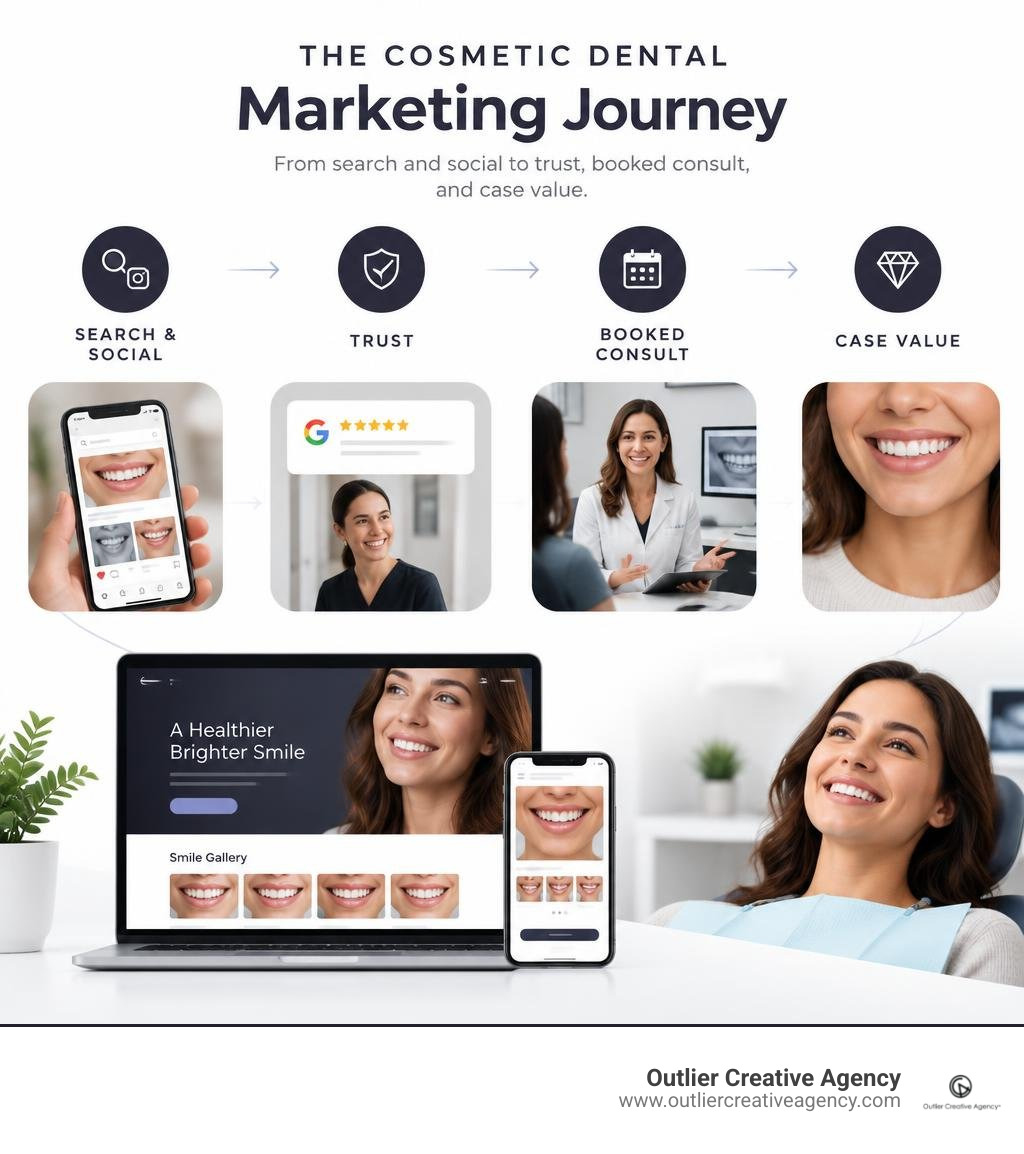
To win more veneer, implant, and clear aligner cases, build your dental office marketing around booked consultations and case value, not clicks. Start with clear treatment pages and a smile gallery that uses photos only with written patient consent. Keep your Google Business Profile current, ask for reviews, and use video and social media to show your team and explain treatments. Add paid search when you can track which inquiries become consultations. For a deeper look at this approach, see our guide to cosmetic dentistry marketing.
I’m Corey Larson of Outlier Creative Agency. My work creating websites, video, and lead-focused content for professional practices shapes how we approach dental office marketing: make the practice easy to find, help people trust it, and measure the cases that result.
High-Converting Website Architecture and Digital Smile Galleries
More than 70% of patients research a dental provider online before booking an appointment. For high-ticket elective procedures like full-mouth restorations, porcelain veneers, and dental implants, your website is your digital storefront. An outdated layout or slow performance creates immediate hesitation for prospective patients evaluating cosmetic care.
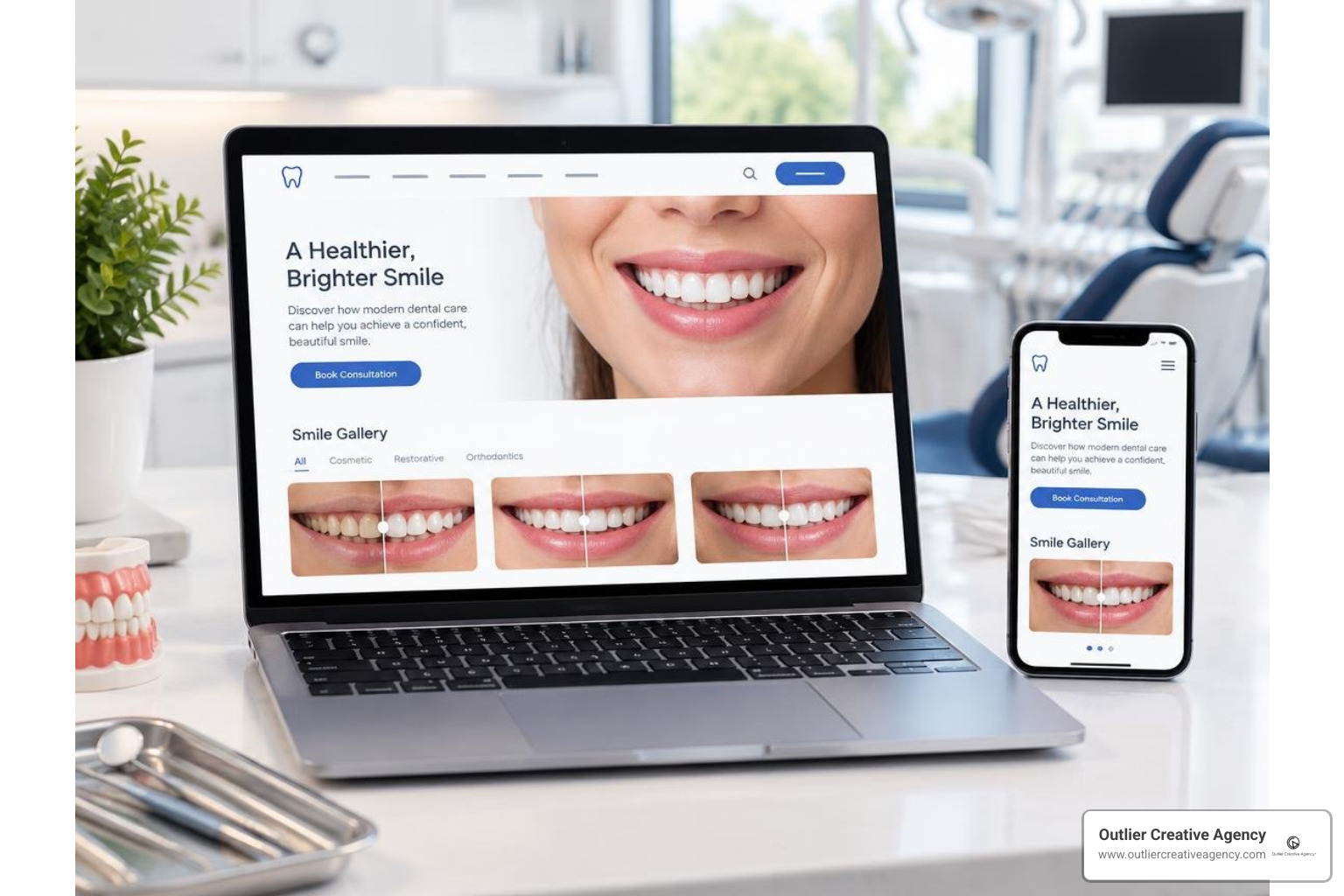
High-performing aesthetic practices invest in custom medical web design engineered for conversions. Your site must load in under three seconds on mobile devices to prevent high bounce rates. Include clear tap-to-call buttons and friction-free consultation booking forms on every single page.
Structuring Procedure Pages for Veneers, Implants, and Clear Aligners
Every elective procedure needs its own dedicated landing page. Combining cosmetic services onto a single generic page confuses prospective patients and hurts organic search rankings.
Structure each procedure page to answer the real questions elective patients ask:
- The Clinical Process: Detail what happens during preparation, temporization, and final placement.
- Investment and Financing: Provide clear payment options, third-party financing information, and membership club details.
- Candidacy Criteria: Explain who qualifies for ceramic veneers versus aligners or composite bonding.
- Consultation Action: Direct visitors toward scheduling a comprehensive cosmetic evaluation.
Visual Storytelling and Compliant Case Presentation
A digital smile gallery is the single most important conversion asset on an aesthetic dental website. Prospective patients need visual proof of your artistic capability and clinical precision.
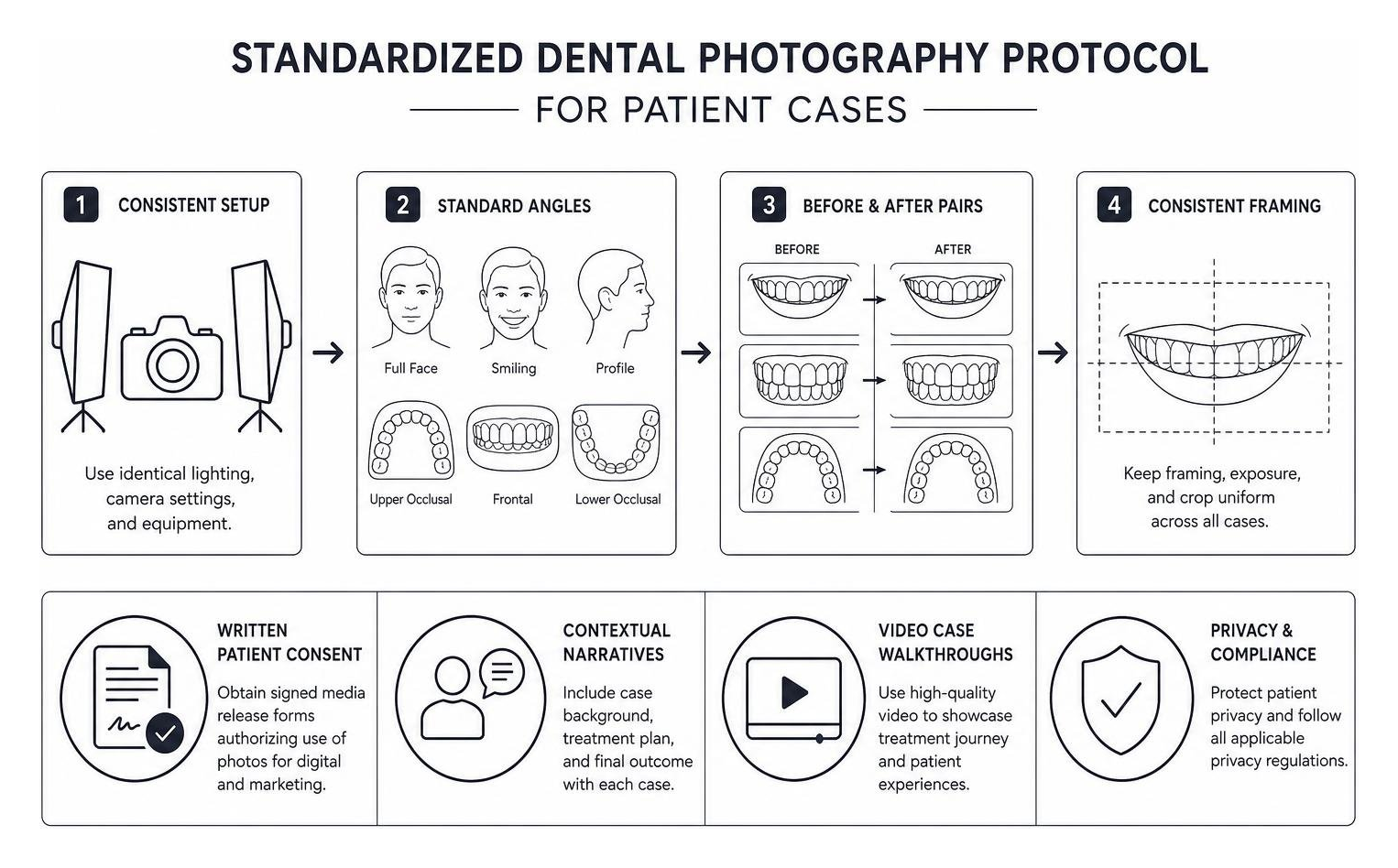
Aesthetic storytelling requires strict adherence to privacy regulations and clinical consistency:
- Standardized Clinical Photography: Use identical lighting, angles, exposure, and framing for all before-and-after photos.
- Written Patient Consent: Never publish patient photos or videos without signed, documented media release forms explicitly permitting digital and marketing use.
- Contextual Narratives: Accompany photos with case background details, explaining the patient's starting condition, treatment plan, and final clinical outcome.
- Video Case Walkthroughs: Use high-production video assets to capture patient milestone celebrations and genuine emotional reactions.
Local Search Visibility and Automated Patient Review Pipelines
Visibility in the local map pack drives the majority of new patient inquiries. Your Google Business Profile (GBP) is viewed three times more often than your actual website. If you neglect local search optimization, you concede high-intent local patients to competing practices.
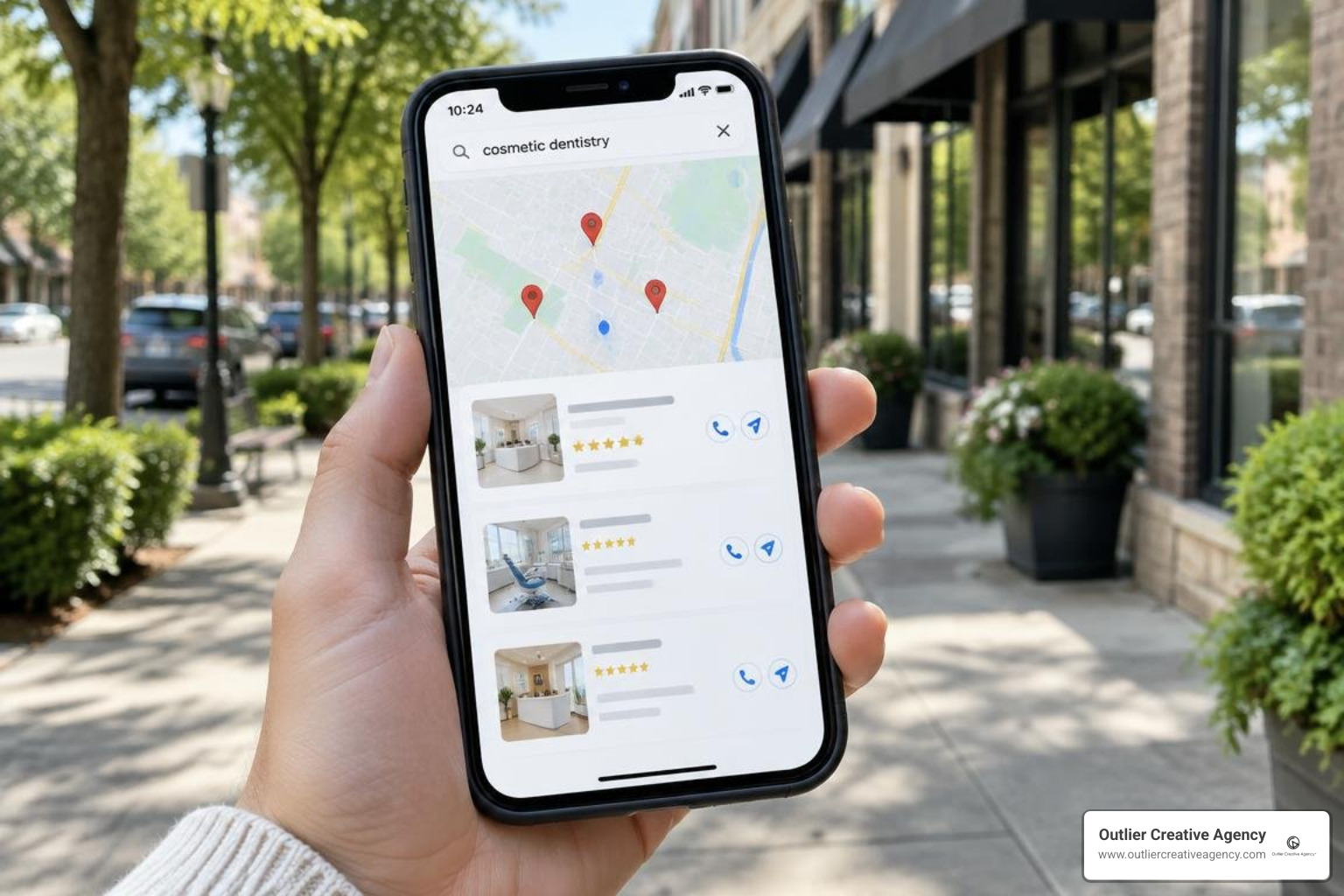
Local search performance relies heavily on review count and review velocity. Search engines reward active, well-reviewed profiles with top visibility. In competitive markets, a practice with 200 reviews at a 4.8-star rating regularly outranks a practice with 50 reviews at a 4.9-star rating.
| Marketing Channel | Typical Time to Initial Results | Conversion Intent | Ongoing Cost Structure | Long-Term Compounding Asset |
|---|---|---|---|---|
| Organic Local SEO & GBP | 3 to 6 Months | High (Active Searchers) | Stable Retainer / In-House Time | Yes (Ranks Sustain Over Time) |
| Targeted Paid Search (PPC) | Days to Weeks | Very High (Immediate Intent) | Per-Click Media Spend + Management | No (Traffic Stops When Spend Stops) |
| Social Media & Branding | 2 to 4 Months | Medium (Discovery & Trust) | Content Production + Ad Budget | Yes (Builds Practice Equity) |
Google Business Profile Optimization for High-Intent Searches
To capture competitive local searches like "cosmetic dentist near me" or "best porcelain veneers," your GBP requires weekly management:
- Primary Category Selection: Set your primary category accurately (e.g., Cosmetic Dentist, Dentist, or Dental Clinic) and leverage relevant secondary categories.
- Weekly Updates and Photos: Publish weekly clinic updates showcasing team milestones, new continuing education certifications, and office features.
- Active Q&A Management: Pre-populate and monitor your profile Q&A with clear answers regarding elective consultations, parking, and financing.
- Consistent NAP Data: Maintain matching business name, address, and phone number details across all healthcare directories and citations.
For complementary social strategies that reinforce local authority, review our insights on building your dental brand on social media.
Building a Five-Star Reputation and Referral Generation System
A structured review generation pipeline delivers measurable ranking improvements within weeks. Automated post-appointment SMS workflows allow offices to capture steady feedback without placing administrative burdens on staff.
When asking for reviews and referrals, implement these proven operational steps:
- Train hygiene and clinical teams to deliver verbal review prompts immediately following successful treatment reveals.
- Send automated, direct-link SMS review invitations within two hours of the patient leaving the clinic.
- Respond publicly, professionally, and within HIPAA parameters to every positive and negative review. Never confirm or deny patient status in a public response.
- Establish clear in-office membership plans to retain uninsured cosmetic patients, referencing resources like the ADA primer on in-office dental plans.
Paid Search and Lead Conversion for Elective Procedures
Organic search delivers long-term equity, but data-driven medical PPC campaigns provide immediate exposure for specific, high-revenue clinical cases. Paid dental advertising costs between $40 and $200 per lead depending on regional market density. Running broad campaigns without strict targeting parameters leads to wasted spend on low-value traffic.
To drive a predictable return, build dedicated landing pages for paid traffic rather than sending clicks to your homepage. Integrate dynamic number insertion (DNI) to track precisely which keywords and ad variations generate booked consults.
Google Ads Structure for High-Value Cosmetic Treatments
Structure paid campaigns around single-treatment intent rather than general dentistry:
- Isolated Treatment Campaigns: Separate veneer, implant, and aligner budgets so high-volume general terms do not drain funds for elective cases.
- Negative Keyword Scrubbing: Actively filter out low-intent search terms like "free," "cheap," "DMO," "Medicaid," or "DIY."
- Geo-Targeting Boundaries: Focus your ad spend tightly on affluent zip codes and primary patient travel corridors around your clinic.
- Headline Value Propositions: Highlight doctor credentials, digital smile previews, or comprehensive consultation offerings rather than discount pricing.
For deeper technical frameworks on campaign attribution, review industry guidance on mastering dental lead conversion.
Front-Desk Conversion Protocols and Fast Lead Response
A paid lead only generates revenue if your administrative team converts the inquiry into a seated consultation. Lead response speed determines conversion success. Following up with digital inquiries within 15 minutes yields significantly higher contact and booking rates than delayed responses.
Implement structured conversion protocols for front-office teams:
- Implement dedicated phone tracking to evaluate inquiry handling, call etiquette, and booking friction.
- Script front-desk responses to guide price-shopping callers toward the clinical value of an in-person aesthetic evaluation.
- Collect deposits or utilize automated appointment confirmation sequences to maintain consultation show rates above 85%.
- Record all inbound lead sources within your practice management software to evaluate monthly production by marketing channel.
Core Pillars of High-ROI Dental Office Marketing
A resilient dental practice relies on a balanced marketing ecosystem. Blending long-term advanced medical SEO strategies with reputation workflows, content assets, and reactivations ensures predictable monthly chair utilization.
A structured reactivation campaign targeting unstarted treatment plans recovers 15% to 25% of stalled cases. Furthermore, direct outreach to patients who completed diagnostic records but never scheduled placement recovers 5% to 10% of lost production without ad spend.
Budgeting and Team Roles for Dental Office Marketing
Industry benchmarks place established dental marketing budgets at 3% to 5% of monthly collections (not gross production). Practices in an aggressive growth phase or opening a new location typically allocate 5% to 10% of collections toward patient acquisition.
Effective execution requires clear delegation:
- Office Manager Commitment: An internal marketing lead typically spends about 10 hours per week (25% of their role) coordinating photography, review generation, and scheduling workflows.
- Clinical Team Support: Hygienists and assistants spend about 5 hours per week identifying candidate cases, initiating chairside cosmetic discussions, and requesting reviews.
- Agency vs. In-House: Keep patient interaction, consent collection, and clinical photography in-house. Outsource technical infrastructure, paid search management, local search optimization, and creative brand production.
Measuring Dental Office Marketing by Booked Consultations and Production
Track marketing success using financial metrics rather than vanity indicators like impressions, clicks, or generic traffic.
Evaluate your marketing performance using these core metrics:
- Cost Per Acquisition (CPA): Divide total channel spend by the number of confirmed, seated new patients.
- Consultation Show Rate: Track the percentage of scheduled cosmetic consultations that arrive at the clinic.
- Treatment Case Acceptance Rate: Measure the percentage of delivered treatment plans accepted and scheduled by patients.
- Revenue Per Chair Hour: Evaluate how elective cases maximize production across operative suites compared to routine hygiene blocks.
Frequently Asked Questions About Dental Office Marketing
What is the most effective marketing strategy for cosmetic dental practices?
The most reliable strategy combines local search optimization, dedicated procedure pages, a verified before-and-after smile gallery, and targeted paid search. Local SEO and a well-managed Google Business Profile capture active search demand, while high-resolution case photography and automated patient reviews build the clinical trust required to convert elective cases.
How much should a dental practice spend on marketing each year?
Established practices looking to maintain chair utilization typically invest 3% to 5% of annual collections into marketing. Practices expanding into high-value cosmetic services, launching new locations, or operating in competitive metro markets should plan to invest 5% to 10% of collections to secure market share.
How long does it take to see results from dental marketing campaigns?
Targeted paid search campaigns can generate qualified consultation requests within days of launch. Automated review generation pipelines show local ranking improvements within weeks. Organic SEO, comprehensive content strategies, and authority building typically require 3 to 6 months to mature into compounding patient acquisition channels.
How do we ensure patient privacy and HIPAA compliance with marketing photos?
Never upload or display patient photos, videos, or treatment details without written, signed media release forms on file. Standardize clinical photography protocols, blur any identifiable chart information or non-clinical background details, and ensure all digital lead data and call-tracking tools operate within HIPAA-compliant parameters.
Conclusion
Winning high-value veneer, implant, and aligner cases requires an intentional patient acquisition framework. By combining high-converting website architecture, verified smile galleries, dominant local search visibility, and disciplined lead conversion protocols, your practice can build a predictable pipeline of elective procedures.
At Outlier Creative Agency, we build data-driven marketing systems and high-impact digital experiences specifically for cosmetic practices seeking sustained, profitable growth. If you are ready to evaluate your current patient acquisition strategy and scale your case production, we invite you to book a consultation with our team.