

Master review management for lawyers to protect your practice reputation, boost local SEO, and convert more clients ethically.
How to Protect Your Law Firm's Online Reputation
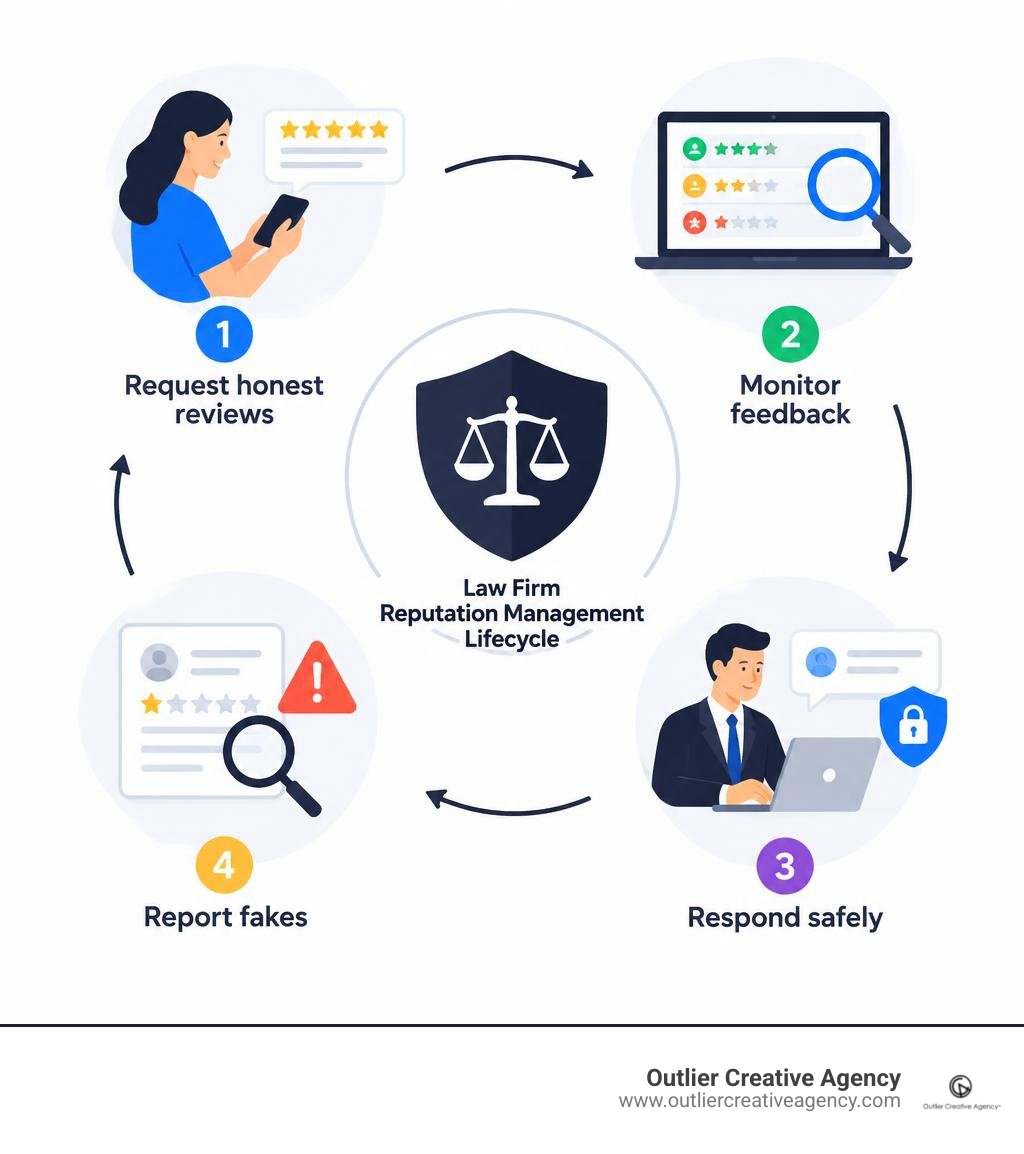
Start review management for lawyers with three habits: Ask clients for honest feedback after a matter ends, check your review profiles regularly, and respond to criticism without sharing client information. If a review appears fake, save the evidence and report the specific platform rule it may violate. Keep requests free of rewards or pressure, and check your state bar's advertising rules before using reviews in marketing.
These steps help protect the trust your firm has earned. They also make it easier to spot service problems early, before they become a pattern.
I'm Corey Larson. At Outlier Creative Agency, my work on legal content, websites, and video has shown me how review management for lawyers fits into a credible online presence.
Why Strategic Review Management for Lawyers Drives Practice Growth
Client reviews directly impact your bottom line and signed caseload. Industry research shows that 93% of consumers say online reviews influence their purchasing decisions. Furthermore, 84% trust online reviews as much as direct recommendations from friends and family. In the legal sector, 76% of prospective clients consider online reviews important or very important when vetting an attorney.
Legal consumers do not browse passively. Research indicates that 80% of potential clients research online reviews before picking up the phone. A robust public track record validates your marketing investments and powers high-converting personal injury marketing campaigns.
The 4.0-Star Conversion Cliff and AI-Driven Recommendations
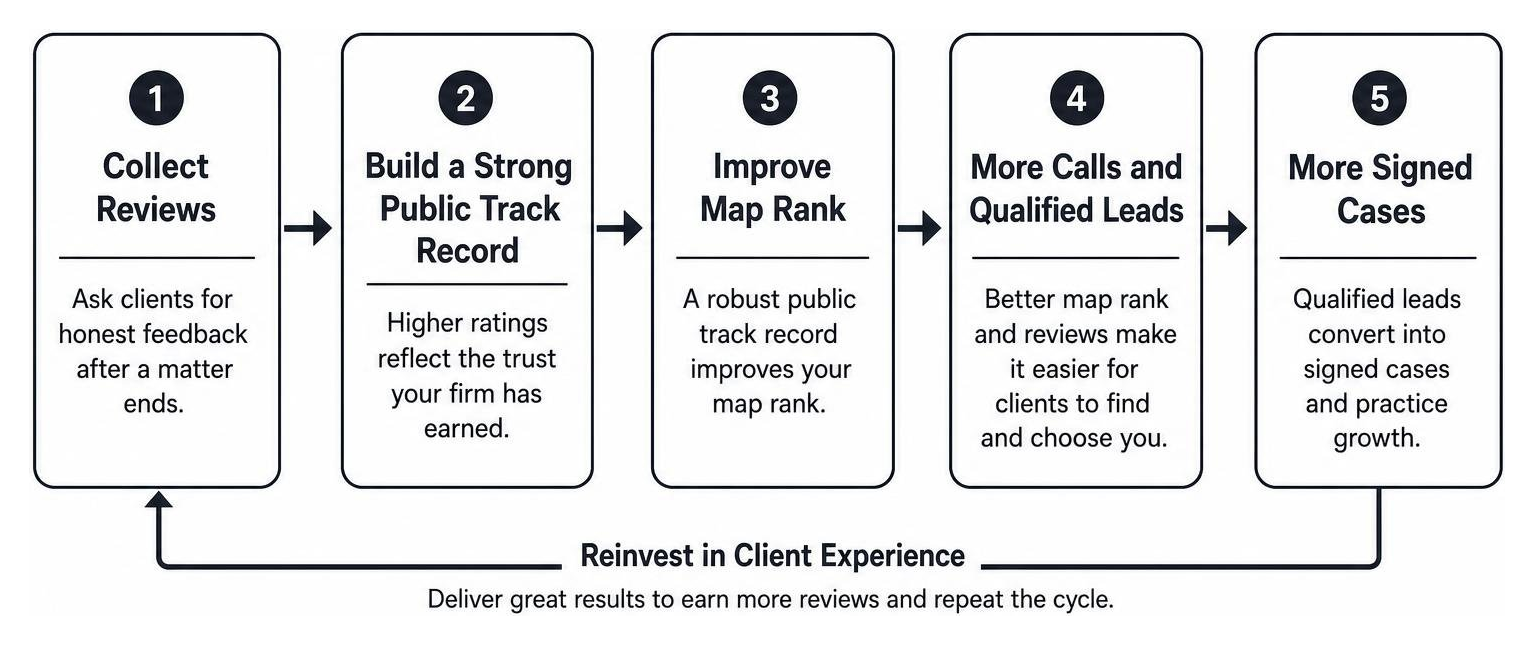
Maintaining a high star rating is critical for signed case volume. Client conversion does not drop gradually as star ratings decrease. It drops off a cliff the moment a firm falls below a 4.0-star average. Our data on law firm marketing benchmarks reveals that most high-value claimants skip firms rated below 4.0 stars entirely.
In addition to prospective clients, generative search platforms and AI algorithms evaluate these scores. Modern search tools prioritize legal practices with consistent review velocity and ratings above 4.5 stars. When AI assistants summarize top-rated local practices, firms with flawless review profiles earn direct brand citations.
How Local Search Algorithms Evaluate Legal Practices
Google evaluates prominence, proximity, and relevance to determine map placements. Review volume, recency, and client sentiment act as primary ranking signals for local SEO. A steady stream of verified reviews signals that your practice is active and trustworthy.
Unhappy consumers are naturally motivated to post. Data reveals that clients who suffer a bad interaction are 50% more likely to share it on social media and 52% more likely to post on an online review site. Counteracting this imbalance requires a structured review generation engine.
Core Review Platforms: Where Law Firms Must Focus Their Efforts
Not all review platforms provide equal value. Law firm managing partners must focus their resources where prospective clients look first and where search engines pull local ranking signals. You can learn more about holistic profiles in our guide on digital marketing for attorneys.
Google Business Profile and Map Pack Dominance
Google Business Profile (GBP) is your primary conversion channel. When an injured person searches for legal representation in Los Angeles or Austin, the Google Local Map Pack captures the majority of organic clicks. Google screening features and star ratings appear directly next to your business name. Maximizing verified reviews on Google directly drives inbound phone inquiries. For additional platform strategies, check out resources on law firm reputation management.
Navigating Legal Directories and Consumer Review Sites
Directory platforms like Avvo and Justia provide valuable legal-specific credibility and contextual backlinks. These profiles rank well for branded attorney searches, offering third-party social proof.
Yelp requires strict care. Yelp terms of service prohibit asking clients for reviews. Soliciting Yelp feedback can trigger a public consumer warning badge on your listing for 90 days. Focus active outreach on Google and legal directories, while leaving Yelp entirely organic. If your firm handles domestic matters, aligning these listings with dedicated family law marketing ensures proper practice positioning.
Ethical Frameworks for Soliciting Positive Reviews
Lawyers must navigate strict professional ethics when asking for client feedback. Review collection must comply with ABA Model Rule 1.6, state advertising rules, and FTC truth-in-advertising guidelines.
Review Management for Lawyers Through Automated SMS Workflows
Timing dictates response rates when requesting client feedback. SMS messages sent within a 24 to 48 hour window after case resolution convert at 12% to 20%. Email requests sent a week later convert at only 3% to 4%.
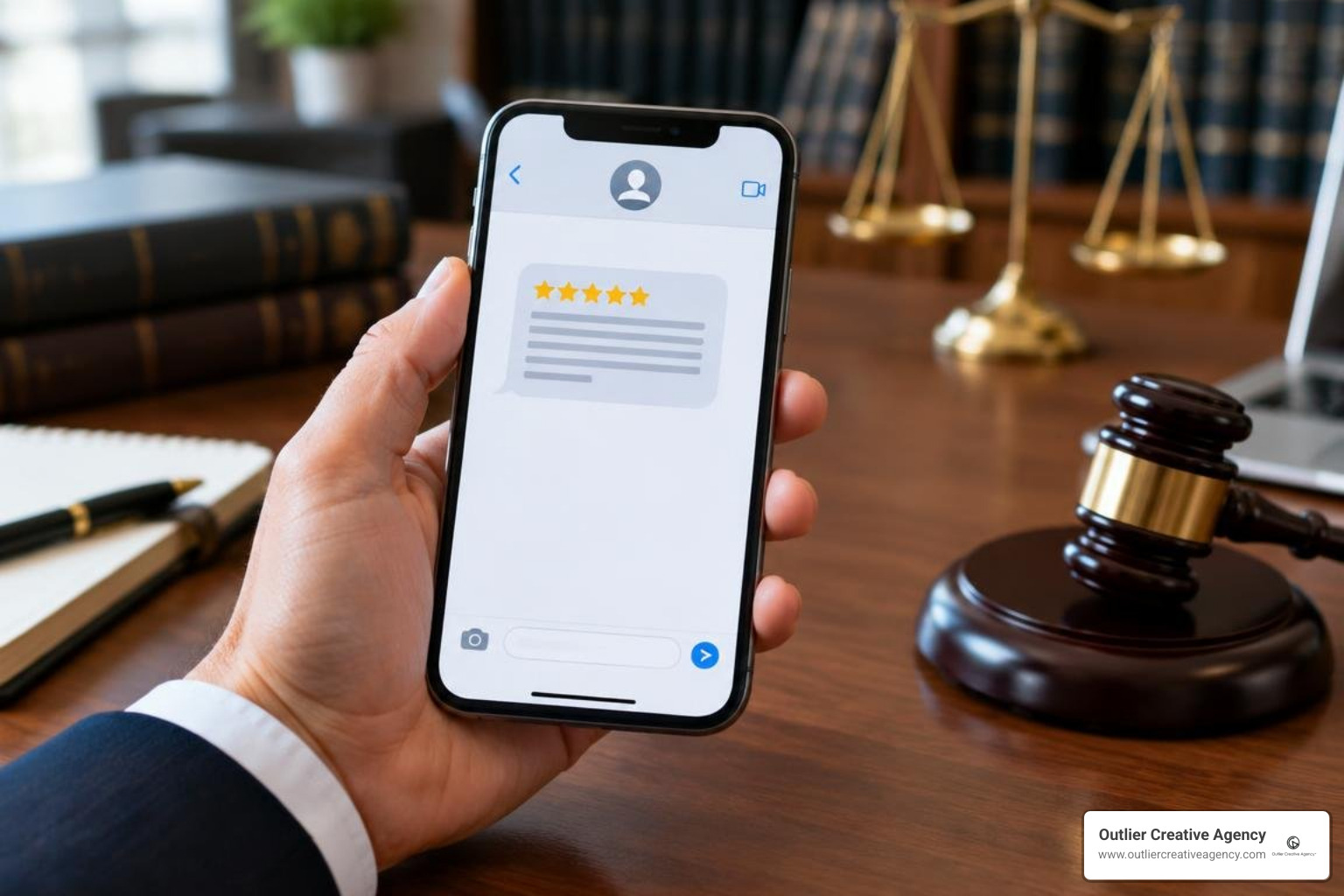
Text messages deliver a 98% open rate and resolve interactions in seconds. Integrating text-based review requests into your practice management software automates review collection right after a successful settlement. Read more about communication strategies in this guide on how law firms use text messaging.
Ethical Boundaries: Avoiding Incentives and Protecting Client Confidentiality
Never offer gift cards, fee discounts, or prizes for reviews. Offering incentives violates FTC rules and state bar advertising standards.
Confidentiality remains essential. Under ABA Model Rule 1.6, the attorney-client relationship itself is confidential. Never pressure a client into leaving a review or ask them to reveal sensitive case specifics. Secure explicit consent before republishing reviews on your website or social media channels.
Responding to Negative Feedback and Deleting Defamatory Reviews
Negative reviews will happen over the lifespan of a practice. How you handle public criticism impacts potential clients more than the rating itself.
Executing Compliant Review Management for Lawyers During Negative Client Disputes
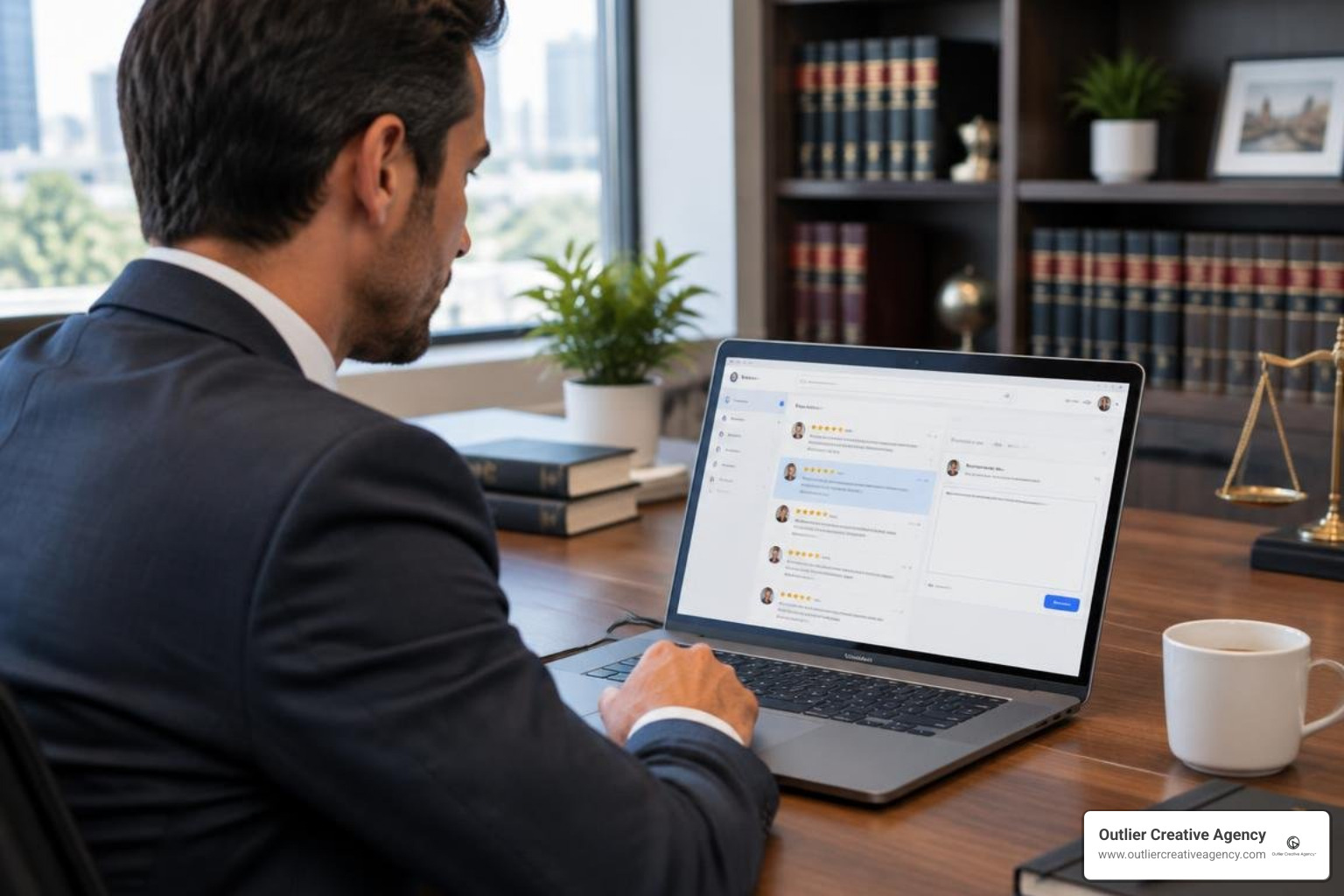
ABA Formal Opinion 496 states that attorneys cannot disclose confidential case information when responding to negative online reviews. Even if a disgruntled client posts false claims about their case, you cannot reveal facts to defend yourself publicly.
Keep your public responses brief, calm, and neutral. Direct the reviewer to an offline conversation with firm leadership.
Step-by-Step Escalation for Removing Fake and Non-Client Feedback
Removing fake reviews requires documented platform violations rather than simple flagging.
- Take a screenshot of the review and document why it violates terms of service (for example, conflict of interest, harassment, or lack of client relationship).
- Submit an initial flag through your Google Business Profile dashboard.
- Wait 3 to 7 days for the automated system review.
- If rejected, open the Google Business Profile Help Tool and request a manual review.
- Provide firm records showing the reviewer was never a client or consultation lead.
- For severe defamation, have your legal team send a formal takedown request citing platform policy violations.
Proactive Digital Reputation Building for Law Firms
A defensive reputation strategy relies on proactive brand ownership. By dominating search engine results pages (SERPs) with owned media assets, law firms protect their search visibility from occasional negative feedback.
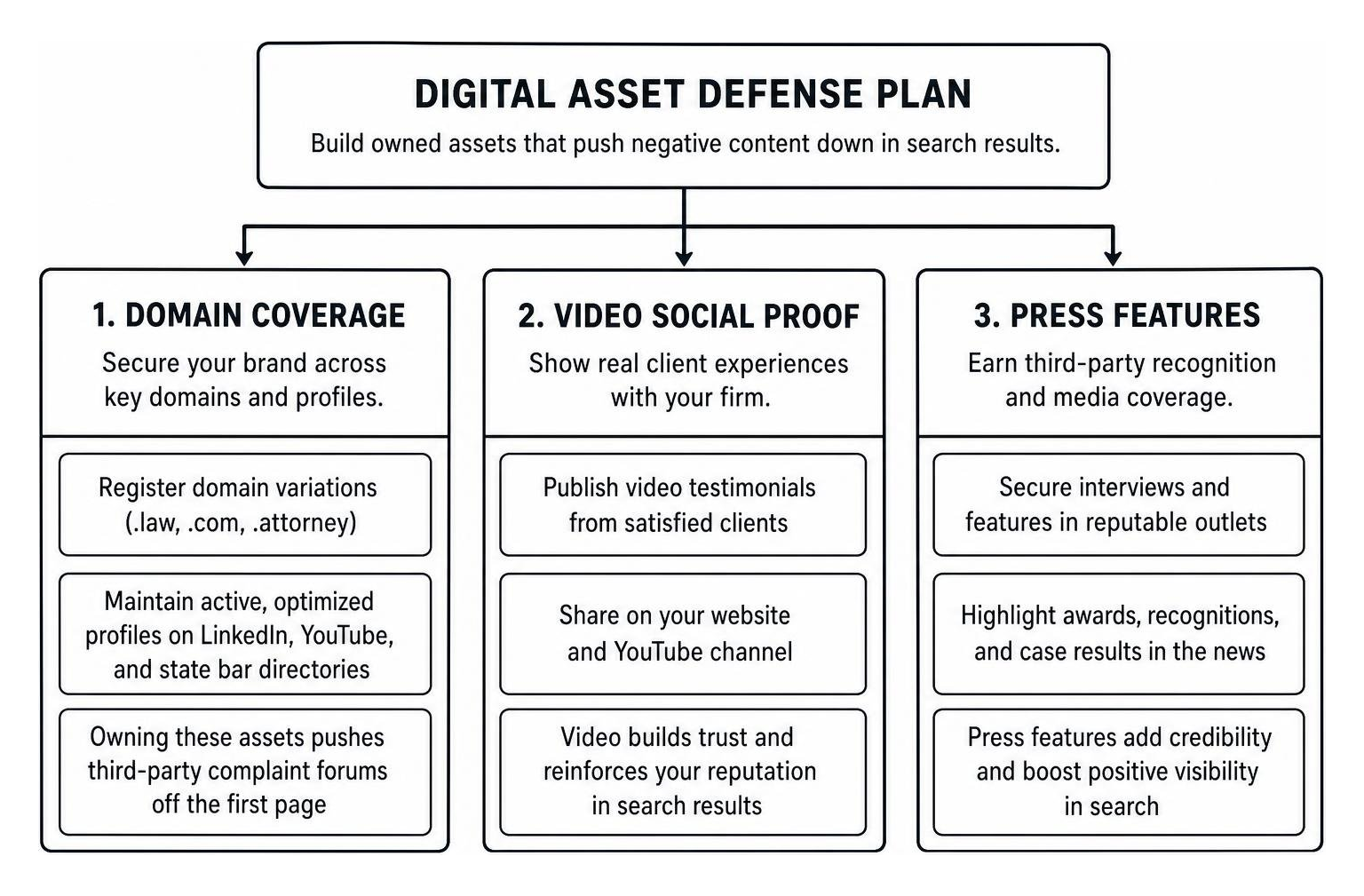
Securing Digital Assets and Domain Variations
Do not leave your brand presence to chance. Register common domain variations of your firm name, including .law, .com, and .attorney extensions. Maintain active, optimized profiles across LinkedIn, YouTube, and state bar directories. Owning these digital properties pushes third-party complaint forums off the first page of search results. For a complete guide to online branding, review our attorney digital marketing overview.
Leveraging Video Testimonials and Legal Thought Leadership
Written quotes can sometimes look generic to skeptical prospective clients. Producing high-quality video testimonials for lawyers adds human emotion and credibility to your marketing.
Combine authentic video reviews with guest articles in recognized legal publications. Publishing educational legal content establishes you as a local authority, insulating your firm from competitive smear campaigns.
Conclusion
Strategic review management is essential for modern law firms. Maintaining an authentic rating above 4.0 stars protects your search rankings, builds client trust, and maximizes signed cases. By creating automated, post-settlement request workflows and using ethical response strategies, you safeguard your firm's local authority.
At Outlier Creative Agency, we build data-driven marketing and reputation engines designed specifically for law firms. If you want to expand your practice with compliant marketing, explore our full suite of legal marketing services and book a strategic consultation with our team today.
Frequently Asked Questions about Law Firm Review Management
Can an attorney publicly reply to a negative review that discloses case details?
No. Under ABA Model Rule 1.6 and ABA Formal Opinion 496, attorneys are barred from disclosing confidential case details in public forums. Even if the reviewer shares specific facts about their case, the attorney cannot confirm those details or share client information in response. Use a standardized safe harbor script inviting the reviewer to speak privately offline.
Is it permissible to offer discounts or gift cards in exchange for a review?
No. Providing incentives, financial rewards, or discounts in exchange for online reviews violates FTC endorsement guidelines, Google terms of service, and state bar advertising regulations. Reviews must remain authentic and uncompensated.
How long does it take for Google to remove a fake review from a non-client?
An initial review flag takes between 3 and 7 days, though automated tools reject many first-time submissions. If you escalate the case to a human specialist through the Google Business Profile Help Tool with clear documentation, the resolution process usually takes 2 to 4 weeks. Complex defamation disputes may require up to 60 days.
Should law firms ask every client for a review?
No. Prioritize clients who had a positive experience and whose matters are fully resolved. Avoid asking clients who expressed dissatisfaction, raised ethical concerns, or whose cases involved sensitive facts that could lead to confidentiality issues in a public review.
Can a law firm use client reviews in marketing materials?
Yes, with written consent. Before republishing a review on your website, social media, or paid advertising, secure explicit permission from the client. Also check your state bar's advertising rules, as some jurisdictions require additional disclosures or prohibit using client testimonials in certain formats.