

Learn how Kline Law Firm handles catastrophic injury, special education, and property tax cases across multiple regions.
What Should Clients Consider When Choosing Legal Representation?
Choosing legal counsel requires evaluating whether an attorney's specific domain knowledge matches your situation. Whether navigating a catastrophic injury, managing property assessments, or handling administrative disputes, legal specialization dictates outcome quality.
When evaluating potential representation, clients should examine three core elements:
- Substantive Practice Focus: Generalist approaches often fall short in specialized fields. Medical negligence, commercial valuation, and administrative disability law each require distinct procedural fluency.
- Jurisdictional Reach: State and local court rules vary widely. An attorney must be licensed and actively practicing within your specific court system.
- Reputation and Proven Case Outcomes: Review verifiable results rather than marketing slogans. Objective records of verdicts, settlements, and appellate decisions provide insight into a firm's litigation capabilities.
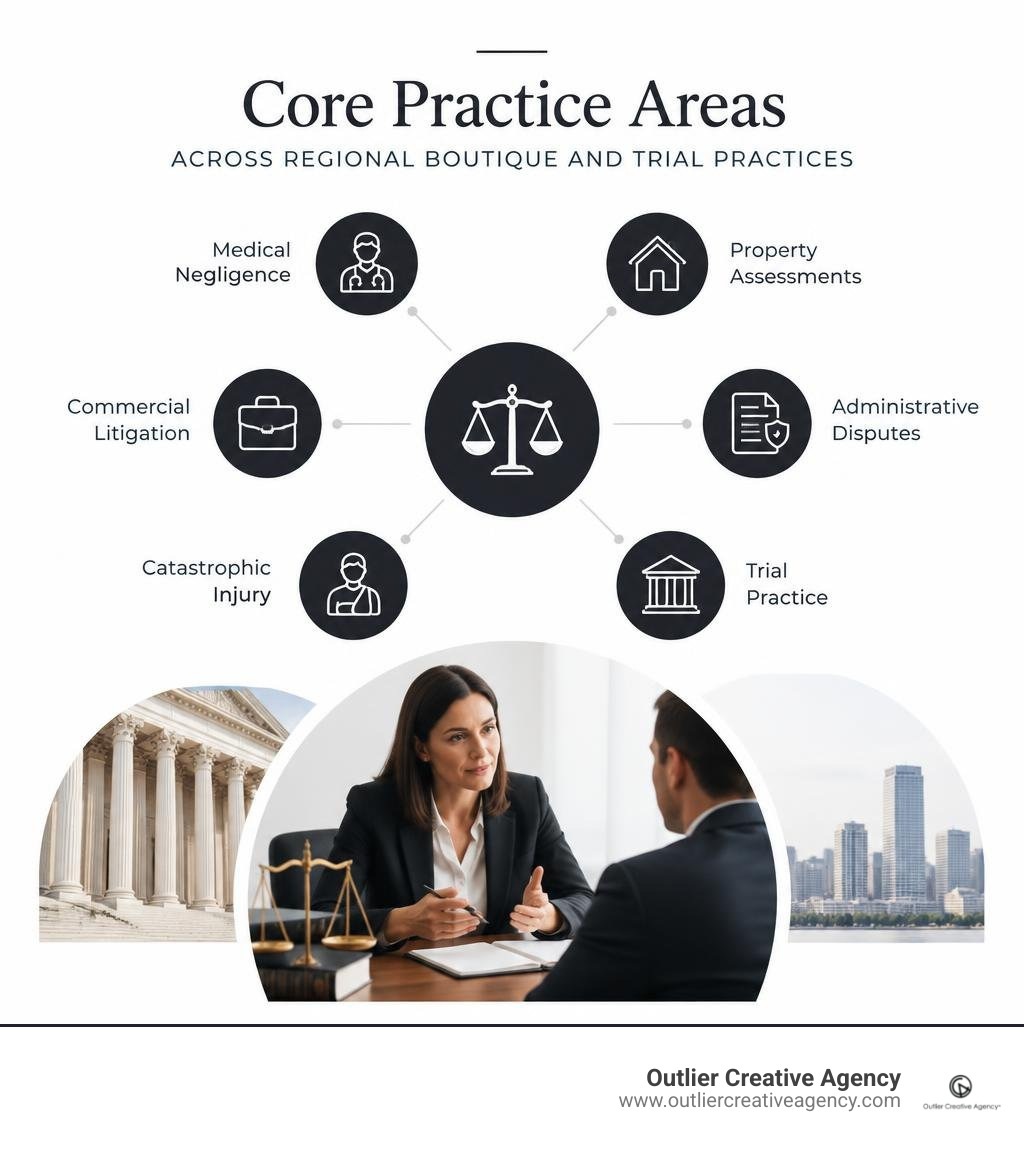
For managing partners and marketing directors, presenting these distinctions clearly is vital. Under State Bar advertising rules (such as ABA Model Rules 7.1 and 7.2), practices must provide truthful, non-misleading information regarding their jurisdictions, specialties, and fee structures. A firm that articulates its niche builds immediate credibility with prospective clients.
How Can Clients Compare Law Firms Across Regions and Practice Areas?
A broad search query can return several distinct legal entities sharing similar names. Prospective clients need to look closely at geographic jurisdiction, core competencies, and operational models to find the right counsel.
| Practice Entity | Primary Focus Areas | Primary Jurisdictions | Fee Structure Model |
|---|---|---|---|
| Kline & Specter, PC | Catastrophic Injury, Medical Malpractice, Whistleblower Claims | PA, NJ, DE, NY | Contingency Fee Model |
| The Kline Law Firm, LLC | Special Education (IDEA, 504 Plans, ADA), Student Advocacy | Georgia | Hourly / Flat Retainer |
| Kline Law Firm PLLC | Commercial Property Tax Appeals, Appraisal District Litigation | Texas | Performance / Hybrid Retainer |
| Kline Law Offices LLC | Wage & Hour Employer Defense, FLSA Compliance | Maine | Hourly Defense Retainer |
| Kline Law Firm | Family Law, Traffic Defense, General Civil Practice | North Carolina | Retainer / Hourly / Flat |
When evaluating complex litigation matters, reviewing how firms communicate their results helps prospective clients gauge capability. Firms that excel in personal injury marketing consistently detail their trial experience and track records to stand out in crowded legal markets.
How Does Trial Experience Matter in Catastrophic Injury and Medical Malpractice Cases?
In catastrophic personal injury and medical negligence cases, a law firm’s willingness and financial ability to take cases to trial directly impacts settlement negotiations. Insurance carriers and defense panels track which plaintiff firms settle early and which routinely try complex disputes before juries.
Major catastrophic injury firms distinguish themselves by building internal teams with specialized scientific and medical backgrounds. For example, some leading practices integrate full-time physician-attorneys into their litigation staff. Kline & Specter | Catastrophic Injury Lawyers employs over 50 attorneys, including five dual-degreed physician-attorneys, allowing their litigation teams to evaluate complex medical records and standard-of-care breaches directly.
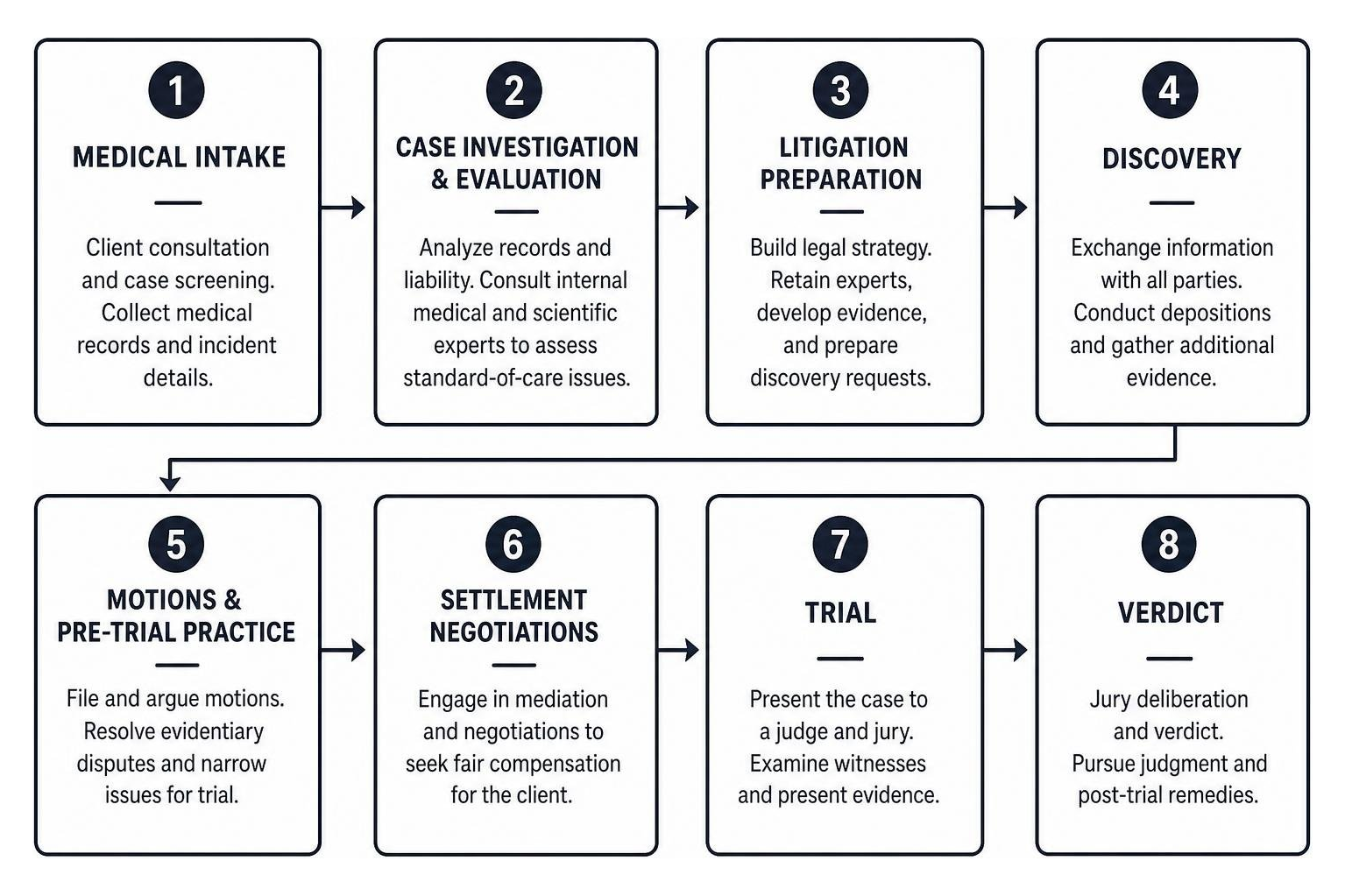
A track record of significant verdicts demonstrates courtroom readiness:
- An $8 billion punitive damages verdict in major pharmaceutical litigation.
- Multimillion-dollar product liability awards, including historic $2.2 billion, $175 million, and $120 million verdicts.
- A $109 million verdict in a fatal power line electrocution dispute.
- Securing six of the eight largest civil verdicts in Pennsylvania state history.
High-stakes practices generally operate on a contingent fee basis. Under this model, the client owes no upfront legal fees or out-of-pocket litigation expenses; attorney fees and advanced costs are deducted solely from the financial recovery obtained through settlement or verdict.
How Can Landmark Legal Outcomes Influence Safety and Public Policy?
Litigation frequently drives systemic changes, safety reforms, and new legislation. When trial attorneys expose corporate negligence or municipal oversights, the resulting verdicts often compel organizational and regulatory accountability.
Key real-world public safety reforms driven by high-stakes litigation include:
- Transit Safety Standards: Lawsuits addressing catastrophic transit injuries have mandated structural upgrades, such as modern safety emergency shut-offs on municipal transit escalators.
- Law Enforcement Vehicle Protocols: Municipal civil liability cases have resulted in stricter departmental guidelines regarding high-speed squad car operation in residential zones.
- Anti-Hazing Legislation: Wrongful death litigation involving university fraternities helped spur the passage of the Timothy J. Piazza Antihazing Law, establishing stricter criminal penalties and university reporting requirements.
- Corporate Fraud Accountability: Whistleblower and False Claims Act actions have uncovered systemic Medicare fraud and substantial corporate tax evasion.
- Philanthropic Support for Legal Education: Major legal figures often reinvest in future advocates, as seen in Tom Kline’s $50 million founding endowment to Drexel University's Thomas R. Kline School of Law.
For those researching broader judicial records or industry names, entities such as retired California Appellate Justice J. Anthony Kline | First Appellate District, market intelligence firm Kline + Company | B2B Market Research & Advisory, and international logistics enterprise "K" Line America, Inc represent completely separate organizations outside these regional legal practices.
How Do Regional Boutique Practices Handle Specialized Legal Needs?

While national trial practices focus on catastrophic personal injury, regional boutique firms provide focused representation for family transitions, administrative education disputes, commercial taxation, and workplace regulations. Successful boutique practices, particularly in competitive areas like family law marketing, emphasize localized court knowledge and direct partner involvement.
What Should Families Look for in Special Education Advocacy in Georgia?
Navigating public school special education programs requires a working knowledge of federal disability statutes and local administrative structures. Parents of children with special needs frequently encounter obstacles when securing appropriate accommodations.
Attorneys and advocates focusing on Georgia special education advocacy at About Special Student Education IEP Atlanta, Georgia support families under key federal statutes:
- Individuals with Disabilities Education Act (IDEA): Guarantees a Free Appropriate Public Education (FAPE) in the Least Restrictive Environment (LRE).
- Section 504 of the Rehabilitation Act: Prevents discrimination and mandates reasonable educational accommodations.
- Americans with Disabilities Act (ADA): Ensures broader structural and civil rights protections for students.
Effective advocacy often combines legal counsel with real-world administrative experience. Teams led by former school district counsel—such as Aric M. Kline, who has over a decade of district representation experience—and former senior administrators like Dr. Elizabeth Morris Turnage (bringing 26 years of public education administrative leadership) offer combined 38-year perspectives that help parents resolve IEP disagreements constructively.
How Does Property Tax Litigation Work for Commercial Property Owners in Texas?
Commercial property owners in Texas face significant annual operating costs from ad valorem property assessments. When county appraisal districts overvalue commercial assets or assess them unequally compared to surrounding properties, formal tax litigation becomes necessary.
Firms practicing property tax reduction focus on the complexities of the Texas Property Tax Code. Commercial owners often turn to firms that leverage Texas law firm marketing principles to demonstrate their valuation dispute process:
- Assessment Review: Coordinating with private tax consultants to review annual county appraisal notices.
- Administrative ARB Hearings: Presenting initial evidence before the local Appraisal Review Board.
- District Court Litigation: Filing formal judicial appeals under Chapter 42 of the Texas Property Tax Code when administrative remedies fail to correct inflated values.
- Appraisal and Market Analysis: Employing independent certified appraisers to document market and equalized value discrepancies, leading to negotiated settlements or trial judgments.
What Should Employers Know About Wage and Hour Defense in Maine?
With increased scrutiny from both the federal Department of Labor and state regulatory agencies, employers must carefully manage their Fair Labor Standards Act (FLSA) compliance. Wage and hour litigation can involve substantial statutory penalties, liquidated damages, and mandatory attorney fee awards.
Attorneys handling Maine wage and hour defense at Wage & Hour Lawyer in Maine - Kline Law Offices LLC assist regional businesses with essential compliance and litigation challenges:
- Worker Classification: Defending against claims regarding independent contractor misclassification and exempt versus non-exempt employee status.
- Overtime Regulations: Navigating complex overtime rules, including specialized exemptions like the Motor Carrier Act.
- Payroll and Leave Compliance: Addressing minimum wage requirements, tip-pooling arrangements, and Family and Medical Leave Act (FMLA) obligations.
Law firms offering these services frequently turn to specialized digital marketing for employment attorneys to highlight proactive wage audits that help businesses avoid costly wage claims.
What Legal Services May Clients Need in North Carolina?
Individuals and small business owners throughout North Carolina frequently require counsel for family matters, traffic citations, and local court disputes. Practices like Kline Law Firm | Family Law | Traffic Law | Civil Litigation | Divorce | Winston Salem | Serving Forsyth, Guilford, Davidson, Surry, and Stokes Counties deliver community-focused representation across Forsyth, Guilford, Davidson, Surry, and Stokes counties.
These community-focused practices handle core everyday legal needs:
- Domestic and Family Law: Managing contested and uncontested divorce proceedings, equitable property division, child custody disputes, and support agreements.
- Traffic Violations and License Defense: Defending against speeding infractions, moving violations, and driver's license suspensions to prevent insurance spikes.
- General Civil Litigation: Representing individuals and small businesses in local breach of contract matters, collections, and property disagreements.
What Factors Define Success Across Modern Law Practices?

Whether handling a national product liability case or a local family dispute, top-performing legal practices rely on consistent operational and ethical principles.
- Clear and Transparent Fee Structures: Clients need to know upfront how legal services will be billed, whether through contingent fees, hourly rates, or flat retainer agreements.
- Interdisciplinary Expertise: Modern legal disputes frequently require non-legal insights, from medical doctors reviewing records to valuation consultants assessing real estate.
- Responsive Communication: Effective representation depends on keeping clients consistently informed about case milestones and strategy adjustments.
- Responsible Legal Marketing: Forward-thinking firms use data-driven, compliant online strategies—as shown in our law firm SEO case study—to ensure potential clients can find accurate, helpful information about their services.
How Can Clients Navigate Legal Representation and Modern Practice?
Finding the right law firm comes down to matching your specific legal issue with an attorney's geographic bar admission, practice focus, and trial background. An elite trial practice in Pennsylvania is the right fit for a catastrophic injury claim, while a regional Texas boutique is built for a commercial property tax appeal.
At Outlier Creative Agency, we work with law firms across the country to present their practice areas, credentials, and achievements clearly online. If your firm is ready to enhance its digital presence, reach qualified leads, and build authority while adhering to all bar advertising standards, explore our PPC advertising for law firms and schedule a strategy consultation with our team.
What Are Frequently Asked Questions About Choosing a Law Firm?
How do contingency fees work in personal injury cases?
In a contingency fee arrangement, the client does not pay upfront legal fees or litigation expenses. The law firm covers all investigation, expert witness, and court costs throughout the case. If the case resolves successfully through a settlement or verdict, the firm receives an agreed-upon percentage of the recovery. If no recovery is made, the client owes nothing for legal fees.
How can clients determine whether a law firm serves their area?
To confirm whether a law firm can handle your matter, check the attorneys' state bar admissions on their website or verify them directly with your state's licensing agency. Many firms also list their primary practice areas, local office locations, and surrounding county courts on their jurisdictional service pages.
What experience can help with special education advocacy?
Look for advocacy teams that combine legal knowledge of IDEA, Section 504, and the ADA with direct, experience in public school administration. Attorneys and advocates who have worked within school district systems often bring valuable insight into IEP development, accommodations negotiations, and administrative dispute resolution.
How does commercial property tax litigation work in Texas?
Commercial property tax litigation begins after an owner challenges an initial assessment with their local county appraisal district. If the Appraisal Review Board (ARB) does not provide a fair reduction, the owner—often alongside their tax consultant and legal counsel—can file a formal lawsuit in Texas District Court under Chapter 42 of the Texas Property Tax Code to adjust the valuation and reduce their tax liability.