

Turn casual web searches into paying retainers with proven internet marketing for lawyers. Learn SEO, PPC, and compliance strategies to grow your firm.
Why Is Internet Marketing for Lawyers Essential for Client Acquisition?
When individuals face sudden legal distress—whether navigating a contested divorce, an unexpected workplace dispute, or an urgent arrest—they rarely consult the yellow pages or wait for a billboard to appear on their commute. Today, 96% of people seeking legal advice use a search engine to find a lawyer, according to the National Law Review. The modern client journey begins with high-intent digital queries, making active online visibility a non-negotiable requirement for sustainable law firm growth.
Relying exclusively on traditional word-of-mouth referrals creates unpredictable revenue cycles. When you implement a comprehensive system for digital marketing for attorneys, your firm meets prospective clients at the exact moment their legal need arises. Organic search traffic captures users who are actively looking for immediate legal representation, driving pre-qualified prospects directly into your intake pipeline.
Core Components of High-Performing Internet Marketing for Lawyers
Achieving consistent caseload growth requires an integrated, multi-channel marketing engine rather than isolated tactics. The most effective law firm marketing ecosystems combine:
- Organic Search Engine Optimization (SEO): Building topical authority and technical site health so your practice ranks for competitive legal queries.
- Local Services Ads (LSAs) and Google Ads: Securing top-of-page real estate above traditional organic results to capture immediate, high-intent legal searches.
- Conversion Rate Optimization (CRO): Designing clear intake pathways, friction-free contact forms, and click-to-call functionality to ensure web visitors actually convert into consultations.
- Content and Video Marketing: Establishing subject matter authority and building trust before a prospect ever picks up the phone.
Integrating these channels is the foundation of the best law firm internet marketing strategies, ensuring your firm maintains a dominant presence across every stage of the prospect's decision-making process.
How Do Search Engines Connect Potential Clients with Law Practices?
Google's algorithms evaluate localized intent, domain authority, and user experience signals to pair searchers with the most relevant legal counsel. Research shows that 74% of consumers visit a law firm's website to take action, such as scheduling a consultation or calling the office directly. Furthermore, 60% of law firms report that their website is the most effective marketing channel for generating new clients.
When someone searches for a phrase like "probate lawyer near me," search engines prioritize three primary elements: Google Business Profile proximity, local organic authority, and mobile site performance. Ensuring fast page load speeds and intuitive mobile navigation directly influences whether a user stays on your page or bounces back to a competitor's listing. Adopting modern approaches to law firms digital marketing ensures your technical infrastructure satisfies both algorithmic requirements and human expectations.
How Can Law Firms Build an Authoritative SEO and Content Engine?
A robust search presence transforms your law firm’s website from a passive digital brochure into an active lead-generation engine. Data indicates that law firms that invest in SEO see an average conversion rate of 14.6%, vastly outperforming outbound methods like cold outreach (1.7%). Building authority requires combining deep local signals with educational content that addresses your prospective clients' most urgent legal questions. Understanding how to market law firm websites organically ensures you capture consistent, compounding traffic without paying for every single click.
Optimizing Local SEO and Google Business Profiles
Local search visibility drives high-value phone calls for regional practices. To dominate the local 3-pack on Google Maps, focus on these critical local SEO foundations:
- Google Business Profile (GBP) Completeness: Fully populate your primary and secondary categories (e.g., "Personal Injury Attorney," "Trial Attorney"), upload professional office imagery, and list accurate office hours.
- Name, Address, Phone (NAP) Consistency: Maintain exact citation consistency across legal directories including Justia, FindLaw, Avvo, and local chamber of commerce listings.
- Localized Content Hubs: Build dedicated landing pages for each municipality or neighborhood you serve, embedding local schema markup and referencing nearby landmarks or jurisdictional courts.
- Active Review Velocity: Regularly generate genuine client reviews that naturally reference specific legal services and geographic locations.
Creating High-Value Legal Content and Video Marketing
Publishing substantive, well-researched content establishes legal credibility while capturing long-tail search traffic. In fact, law firms that blog receive 97% more leads than those that don't. Instead of drafting academic treatises, create practical legal guides, jurisdictional FAQ pages, and breakdowns of common legal processes.
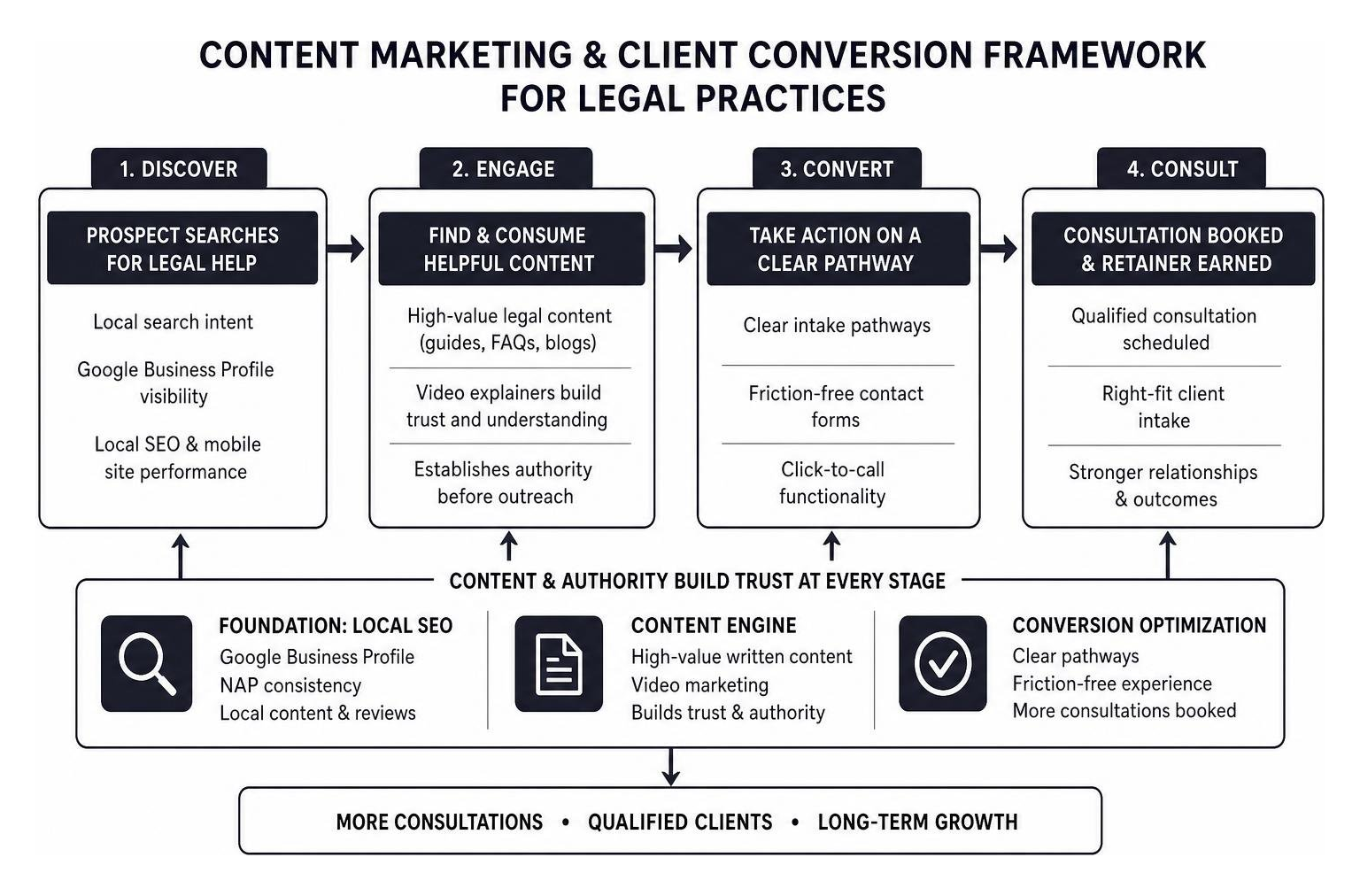
Pairing written content with video dramatically accelerates engagement. Law firms that use video marketing see a 54% increase in brand awareness and a 41% increase in website traffic. Producing short video explainers answering common questions—such as bail procedures or defense strategies—humanizes your attorneys and lowers client hesitation. For example, tailored video content is highly effective within digital marketing for criminal defense attorneys, where clients urgently need reassurance and immediate clarity regarding their rights.
How Do Paid Ads and PPC Drive Immediate Retainers?

While organic SEO builds long-term equity, pay-per-click (PPC) advertising provides immediate visibility for commercial-intent queries. Google Ads for lawyers achieve an average click-through rate (CTR) of 3.17% across all legal practice areas, placing your firm at the very top of search engine results pages when prospective clients need representation immediately.
| Ad Channel | Cost Structure | Best Use Case | Primary Advantage |
|---|---|---|---|
| Google Local Services Ads (LSAs) | Pay-per-lead | Direct phone calls & local emergencies | Google Screened badge, placed at top of results |
| Google Search Ads (PPC) | Pay-per-click | High-value, specific litigation cases | Granular keyword targeting & custom landing pages |
| Retargeting Display Ads | Pay-per-impression/click | Nurturing past website visitors | Reinforces brand recognition across the web |
Best Practices for Legal Pay-Per-Click Campaigns
Legal advertising is exceptionally competitive, making disciplined campaign architecture critical. Key practices include:
- Aggressive Negative Keyword Management: Exclude non-revenue queries such as "pro bono," "legal aid," "law school salary," or "free advice" to avoid wasting marketing spend.
- Dedicated Conversion Landing Pages: Never route paid ad traffic to your home page. Send users to focused, single-objective landing pages featuring clear call-to-action buttons, trust badges, and simplified contact forms.
- High-Intent Keyword Matching: Prioritize phrase and exact match bidding on search terms indicating an intent to hire, such as "wrongful termination attorney consultation" or "hire wage dispute lawyer." These targeted strategies are crucial in competitive niches like digital marketing for employment attorneys.
Managing Bidding Strategies Across Competitive Practice Areas
The cost of paid legal traffic varies widely depending on your practice area and market size. While the average cost per click (CPC) for law firm Google Ads is $6.75, it can range from $1.02 to $13.76 (and significantly higher in major metropolitan personal injury markets).
Managing these costs requires advanced bidding strategies. Transitioning from manual CPC bidding to Target Cost-Per-Acquisition (Target CPA) or Target Return on Ad Spend (ROAS) allows Google's machine learning models to adjust bids in real time based on user conversion probability. In complex, bilingual, or federal practice areas—such as managing campaigns for digital marketing for immigration attorneys—meticulous audience segmenting and geo-targeting prevent wasted budget on out-of-jurisdiction inquiries.
How Can Attorneys Leverage Social Media, Reviews, and Email Automation?
Converting casual website visitors into signed retainers requires nurturing prospects across multiple touchpoints. Establishing social proof through client reviews and maintaining contact via automated messaging builds long-term client trust and sustains steady referral flow.
Managing Online Reviews and Multi-Platform Reputation
Positive reviews represent the strongest social proof for potential legal clients. To build an ethical, high-converting review generation system:
- Incorporate Review Requests into Intake Workflows: Request feedback systematically at major positive milestones (e.g., successful settlement, case dismissal, or estate plan finalization).
- Diversify Review Profiles: Direct satisfied clients to Google Business Profile, Avvo, Martindale-Hubbell, and the Better Business Bureau.
- Maintain Ethical Response Protocols: Never disclose confidential case details or client identities when responding to reviews, even when addressing negative feedback. A simple, professional response acknowledging the comment and inviting an offline conversation protects attorney-client privilege while showcasing professionalism.
Nurturing Leads with Targeted Email Marketing Sequences
Not every prospective client signs a retainer during their initial website visit. Automated email workflows keep your law firm top of mind while prospects evaluate their options.
- Immediate Intake Acknowledgments: Automatically confirm form submissions with next steps, office expectations, and intake staff contact information.
- Educational Consultation Prep Sequences: Deliver helpful checklists guiding clients on what documents to bring to their initial case evaluation.
- Monthly Educational Newsletters: Share firm news, legal updates, and community insights with past clients and referral partners. Evaluating clear attorney marketing automation pricing models helps managing partners implement these scalable nurture systems cost-effectively.
What Compliance Rules and Mistakes Impact Legal Marketing Success?
Legal marketing requires strict adherence to ethical standards. Unlike general e-commerce businesses, law firms operate under rigorous state bar advertising rules and professional conduct standards. Violating these guidelines risks disciplinary action, formal reprimands, and significant financial penalties.
Practicing in strict regulatory environments, such as following the guidelines for California attorney marketing, requires transparent messaging. Crucial compliance rules include:
- Mandatory Disclaimers: Clearly stating that past case results do not guarantee similar future outcomes, and clarifying that initial web interactions do not form an attorney-client relationship.
- Accurate Specialization Claims: Avoiding terms like "specialist" or "expert" unless certified by an authorized state bar board or accredited organization.
- Truthful Content: Ensuring all website copy, case settlement values, and client testimonials are accurate, verified, and not misleading.
Common Pitfalls in Internet Marketing for Lawyers and How to Avoid Them
Many firms undermine their digital marketing investments by making preventable operational mistakes:
- Slow Intake Response Times: Failing to respond to web inquiries within 5 to 15 minutes causes high-intent prospects to contact the next firm on their list.
- Focusing on Vanity Metrics: Tracking page views and social media impressions instead of cost-per-lead, qualified consultations, and signed retainers.
- Inconsistent Branding and Tone: Using inconsistent messaging across social media and website pages diminishes brand authority. Avoiding these pitfalls is central to executing cohesive internet marketing for attorneys that delivers measurable revenue growth.
Tracking Key Performance Indicators and Measuring Campaign ROI
To accurately determine marketing return on investment, legal marketing directors must track end-to-end metrics across the entire client acquisition funnel:
- Cost Per Qualified Lead (CPQL): The total marketing investment divided by the number of viable prospective clients who match your practice area criteria.
- Call and Form Attribution: Utilizing dynamic number insertion (DNI) software to identify which specific campaigns, keywords, or directory listings drive incoming calls.
- Client Lifetime Value (LTV) vs. Acquisition Cost (CAC): Ensuring your cost to acquire a client remains aligned with average case retainers and long-term referral value.
Frequently Asked Questions About Legal Digital Marketing
What is the most effective online marketing channel for a new law firm?
For new firms seeking immediate revenue, combining Google Local Services Ads (LSAs) with an optimized Google Business Profile delivers the fastest return on investment. This combination secures top search placement, displays verified credentials, and drives inbound phone calls from local clients actively searching for immediate legal representation.
How much should law firms budget for internet marketing?
Most growing law firms allocate between 7% and 15% of their gross annual revenue to marketing. Firms in highly competitive metropolitan markets or high-stakes litigation areas (such as personal injury or complex commercial disputes) often reinvest 15% to 20% or more to outpace aggressive competitors.
How long does it take for law firm SEO to generate qualified leads?
Law firm SEO typically produces measurable ranking improvements and initial qualified leads within 4 to 6 months, with substantial compounding returns developing over 9 to 12 months. Factors impacting timelines include the age and authority of your domain, local market competition, technical site health, and the volume of high-quality legal content published.
Conclusion
Building a scalable law firm requires treating your digital marketing as an integrated, measurable client acquisition engine. By optimizing your website for high-intent search queries, producing authoritative content, running targeted paid ad campaigns, and maintaining rapid intake workflows, you can turn casual online searches into consistent, paying retainers.
At Outlier Creative Agency, we design and manage data-driven marketing systems exclusively for law firms across the nation, helping managing partners increase caseloads and scale their practices safely within state bar compliance rules. If you are ready to expand your firm's market share, explore our specialized legal PPC advertising campaigns and schedule a strategy consultation with our team today.